

May 2026
Shana – Jomolhari – Lingshi – Chebisa – Laya – Narethang – Chozo – Lunana – Kashgar Puensum BC – Dhur – Bhumtang
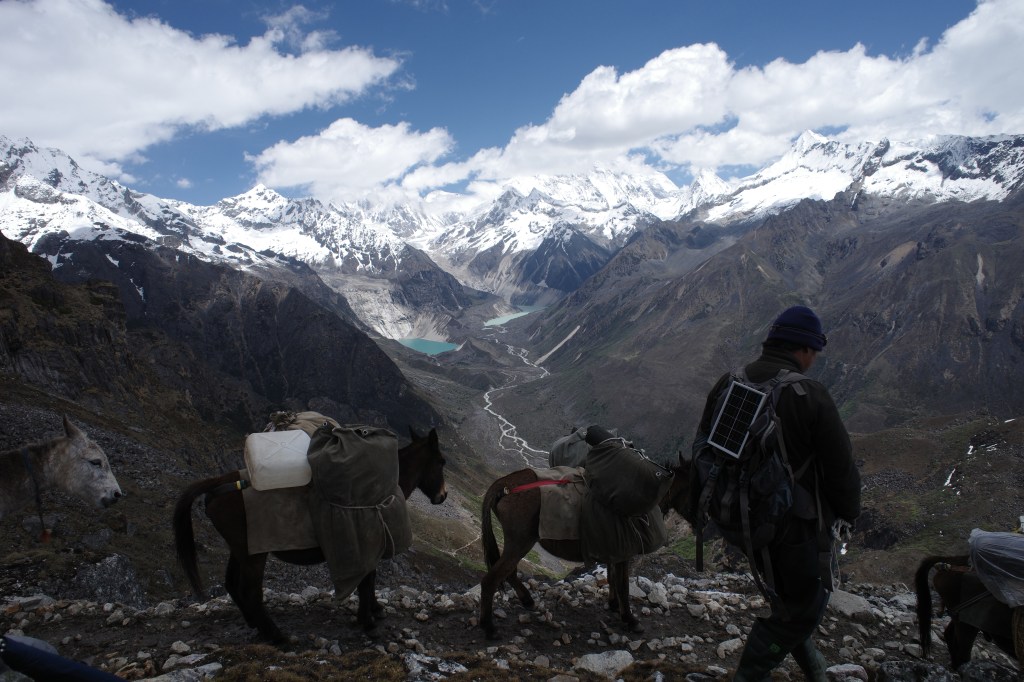
The Snow Man trek. According to many, and especially the Bhutan marketing department, the ultimate trek in the Himalaya. Crossing over a dozen passes, this trail all along the northern border of Bhutan takes 20 days to complete. Though famous, the trail sees few tourists, only early October you can expect tourists along the trails.
Where the marketing department would argue that it is the extreme remoteness and roughness of the trek keeping people away it is more likely to be the staggering costs that this treks brings with it.
Though definitely not the toughest trek in the world. Not by a long shot. The trek is definitely very committing, once you get on your way there is aside from Laya and a Helicopter rescue no place to call quits. Despite it taking second place to many high altitude treks in Nepal en Pakistan in terms of scenery. The general forested ambience and continuity of the trek, make it without a doubt one of the Himalayan crown jewels. Together with the Snow lake Gondogoro la, Rara Lake to Lo Manthang, Kachenjunga to Makalu and Three ice cols GHT sections this makes up one of the best Himalaya through hikes.
Though I would rate it a top 5 Himalaya GHT hike, the Snow Man trek does not seem to attract many hikers that frequent the Nepalse Himalaya. Even though the scenery and culture bear similarities, Bhutan seems to fall of the map for many Himalaya enthusiasts. The Snow Man trek truly seems to draw it’s own audience. The most probable reason for this is that the mode of travel is very different. Where other Himalaya nations feel rather rough on the edges, Bhutan is a managed wilderness, with highly standardized and regulated itineraries. You are for example obligated to hire a team of at least 4 people and bring mules. A concept that has been abandoned long ago in Nepal. This makes the trek a luxury experience instead of an expedition. It does come with a large drawback. Mules are, though incredibly tough, not as tough as humans. An early snow fall can turn you around. It is unclear how many people fail to complete the circuit (I have my doubts about the 50 percent completion rate), but it seems far more common than on most other treks with a similar level of difficulty. Especially the section from Thanza to Bhumtang is notorious for forced returns.
For me the Snow Man trek might have been my last long distance hike in the Himalaya. By over 10 years of systematic effort, the impossible seems to have happened. This massive range spanning 2000km somehow has run out of trails… Sure there are some valleys that I still have not visited, but they start to get fewer and far in between and less and less accommodating to long distance hiking. From where I’m currently standing this hike feels as the completion of my GHT dream. I will return to the Himalaya for sure, but this hike felt as the last hike in my series to traverse the whole chain. Being at the very eastern edge of the Himalaya and one of it’s longest hikes, it was a fitting end.
Undertaking this trek felt quite unreal. I had know about this trek since my first visit to the Himalaya, never would I have believed to engage on such an expensive trek back then… But with all worthy alternatives exhausted I gave in.
Season
The Bhutanese Himalaya seem to attract somewhat worse weather than the Nepalse do. Unless 10k is not a serious amount for you or you are looking to complete something very few people have done, trekking from december to march is an insanely risky endeavour. April to mid may also comes with significant risk of lingering snow. If you do pick this season it is best to start from Singkharap giving the snow on the Thanza to Bhumtang section a bit longer to melt. With the same logic it is best to start from Bhumtang in Autumn as you can clear the most unreliable passes as early in the season as possible. Late may to late september provide near guarentees of completing the trek. but especially from early june to early september skies are likely to be cloudy. High up in the mountains you will always get your views once in a while, but consistent clear skies are unlikely in this season. This basically leaves a very tiny window of late september to late October in which clear skies are common and snowfall is still unlikely. This is the trekking widow 99.9 percent of people take and the only time in which the Snow Man Trek could feel somewhat commercialized. If you want the trails to yourself the late meay early June option is likely the best pick. It provides a higher chance of completion and no other tourist. The weather is however way less reliable.
Day 1
It had been a long journey to get to Bhutan. There is no direct flight to this country. You either need to travel here spending a night in either Delhi or Kathmandu. Needless to say that I chose my beloved Kathmandu over whatever Delhi is supposed to be.
My early morning flight from Kathmandu to Paro was quite stressful as the flight got repeatedly delayed due to poor weather conditions over Paro, where the aftermath of a large spring Typhoon was still raging on. Once finally airborne the flight only took about 90 minutes. It felt like taking off, waving good bye to Everest and than preparing for landing again.
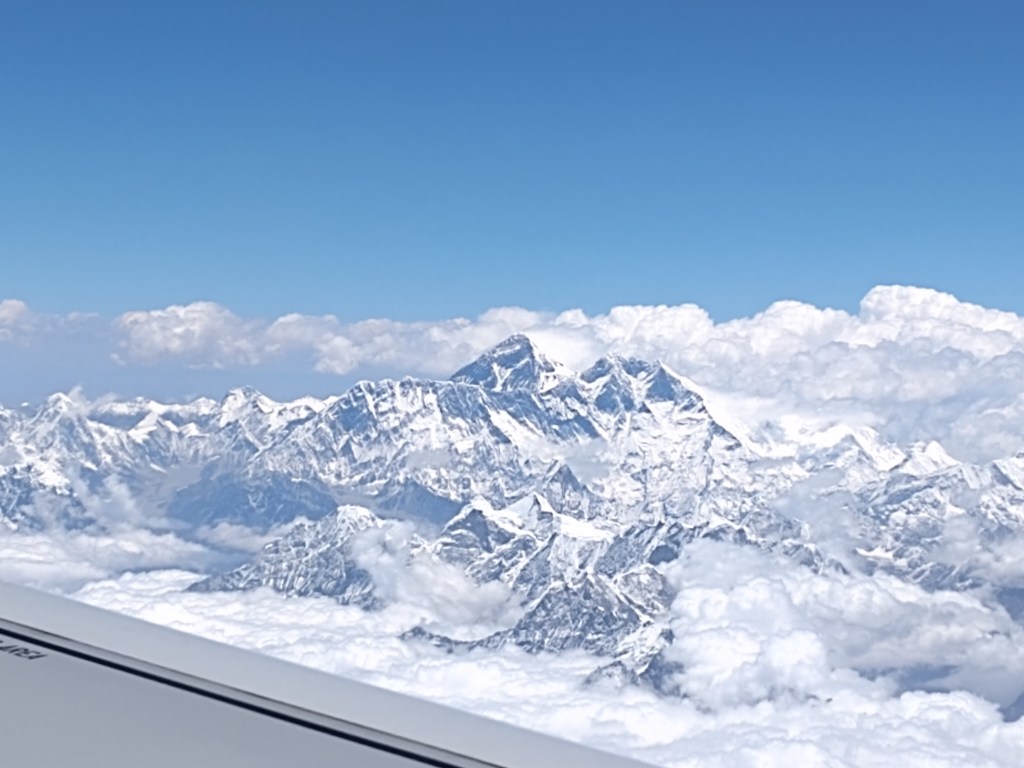
I had chosen an accelerated Snow Man itinerary in order to cut at least some costs. Skipping the near obligatory visit to Tiger Nest and choosing to immediately go to the start of the trek from the airport.
My guide was waiting for me at the airport. We bought some prayer flaggs, exchanged some money and drove to Shinkarap, from where our advanture would begin. It was just a few hours drive. Quite amazing that such a wilderness trek starts just a stone throw from the airport itself.
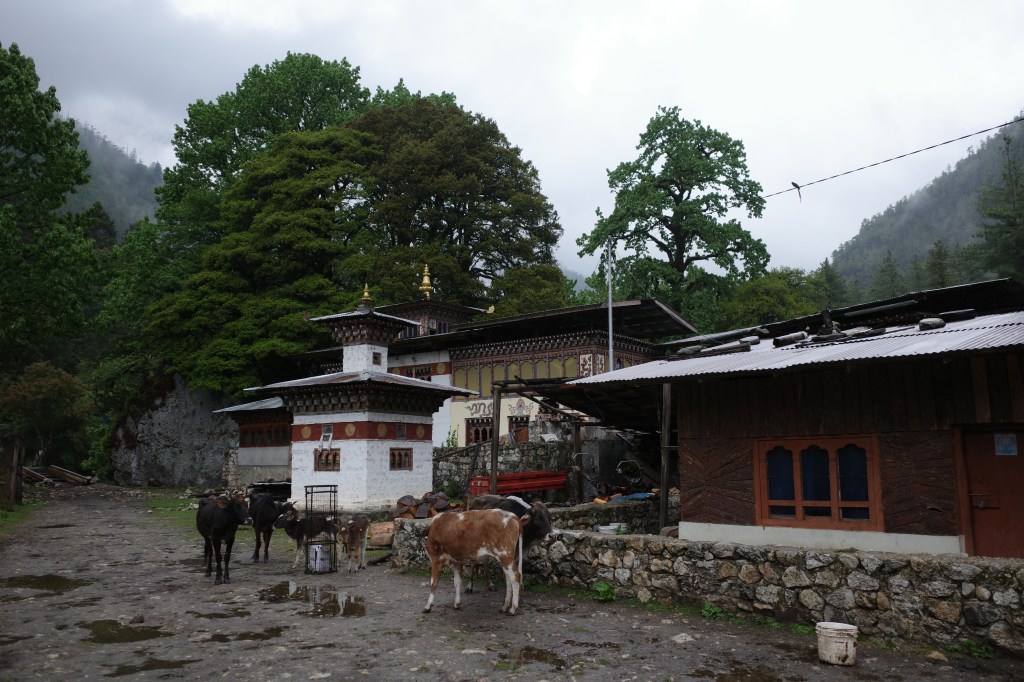
The camping crew had already set up camp and started to prepare food. The forecast did not look promising and for the next few days the expectation was left over rain from the Typhoon. We had however 3 weeks of hiking in front of us and anything could still happen. I was very excited to be at the start of what promised to be my last long distance classical Himalayan trek.
I wondered whether the trek would live up to it’s reputation.
Day 2
We woke up in rather thick mist. Not a great start, but then again best to have the worst weather the first day right. Thinking back of this trek, I actually believed the very worst day had been indeed this one first day…
The trail was broad and easy. It followed the river slowly up all the way to Thantanka, the usual first campspot of the trek. On the way we could see the typical misty Bhutanese mountains and a few farm houses.
My guide was somewhat amazed by our tempo. He had never hiked to Thantanka with quite this power he said. I don’t know why, but Snow Man for some reason does not seem to attract many experienced hikers.
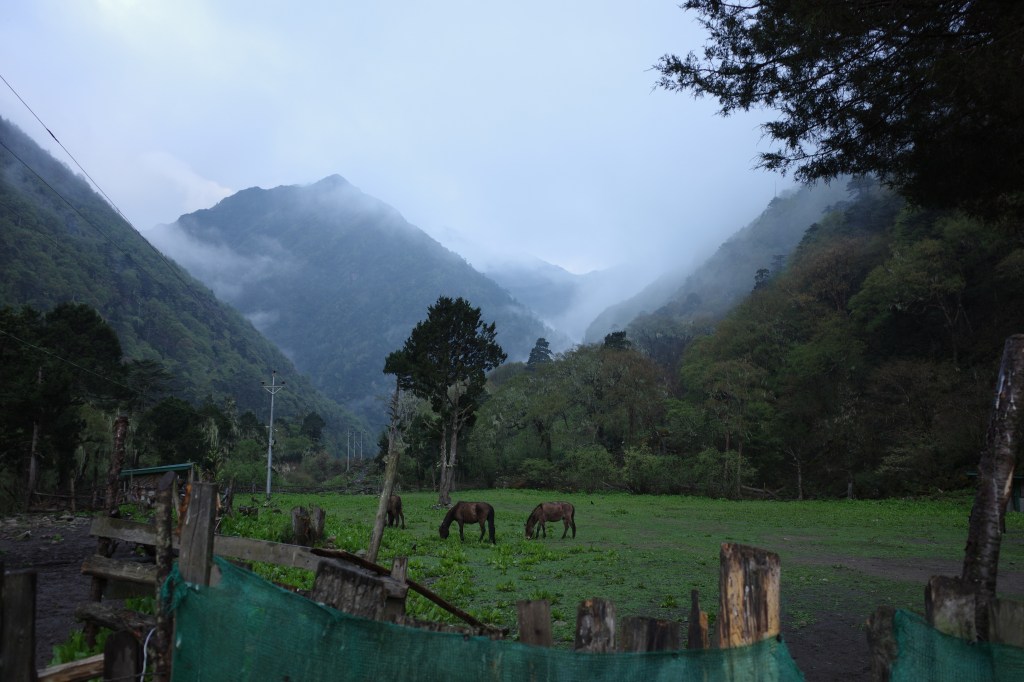
Thantanka was a handful of houses located on a small grazing area. We could sit inside with the hostess every now and then sheltering for the rain. The hostess had a brother who was a voice of Bhutan finalist and called in to get our votes.
Day 3
The skies cleared and we could for a moment see the great snowy Jomolhari peak from our campsite. Would the Cyclone be on it’s way out? That would be very lucky…
As the sun rose and warmed us up it felt like we would have a great day ahead of us. And even though this was only the second day it promised to be a scenic one. we would go up all the way to Jangothang at around 4000m. Quite an aggressive elevation for a second day.
As we followed the trail up the forest grew less and less dense till about an hour before Janghotang leaving the tree line fully behind us. It would not be before Laya that we would find ourselves in pine forest again…
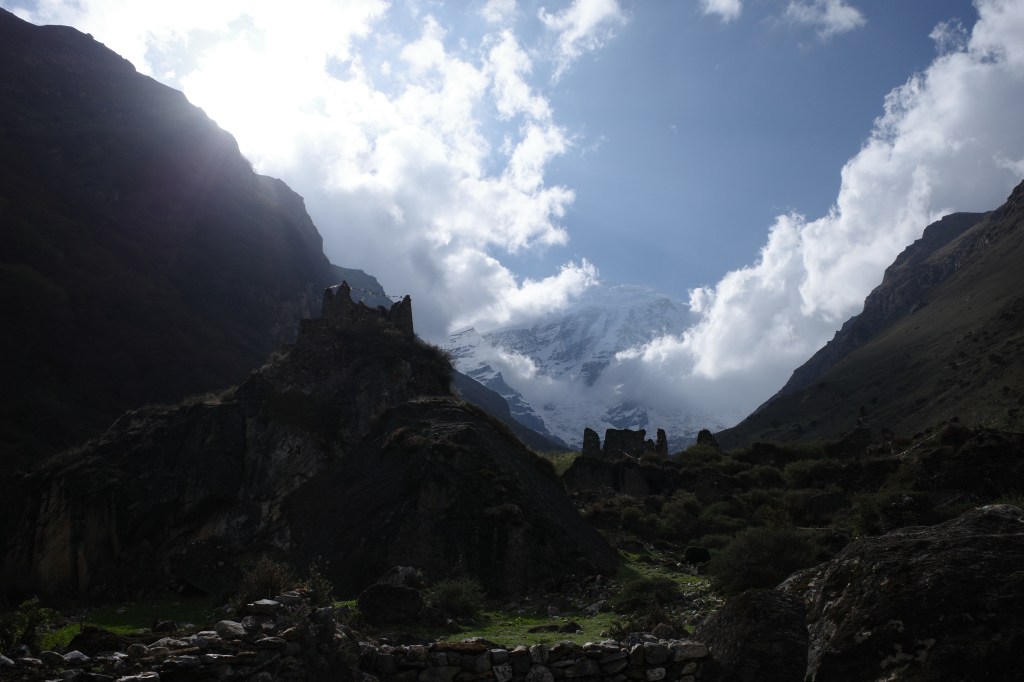
Around Janghotang there is 3 small settlements that seem to be permanently inhabited. There is quite some folk around and even some potatoes are grown. The weather was still nice and sunny as we made it to our camp, but the Jomolhari was hiding in the clouds. Luckily it decided to show itself in full glory in the evening. In the eveing light it was a truly majestic view with the Dhzong ruins in front of it.
Day 4
Today we would be having our aclimatization day. As per usual in the Snow Man itinerary we hiked up to the holy Tshophu lake. From where we had a truly amazing view of the razor sharp peak of the Jichu Drake. I had not expected such good views of such big mountains so early on in the trek.
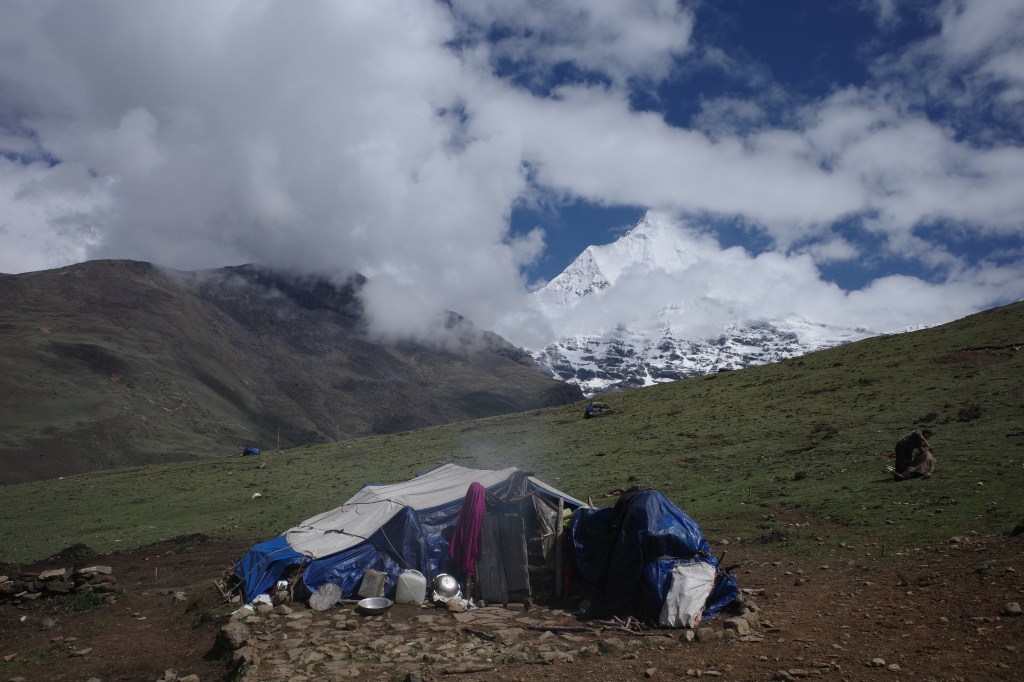
The mountains feel out of place as unline in Nepal where these big mountains are padded with many sub peaks here the Jichu Drake and Jomolhari dominate the landscape without any competition.
Day 5
At last, we started our ascend to the first pass. The first pass of many more to come. The weather started out quite poor, but improved somewhat during the rest of the morning. It seems that in spring in Bhutan it is actually late morning and not early morning that grants the best views. In principle a good thing as the Bhutanese crew seems to refuse to get going before having cooked a 5 course breakfast.
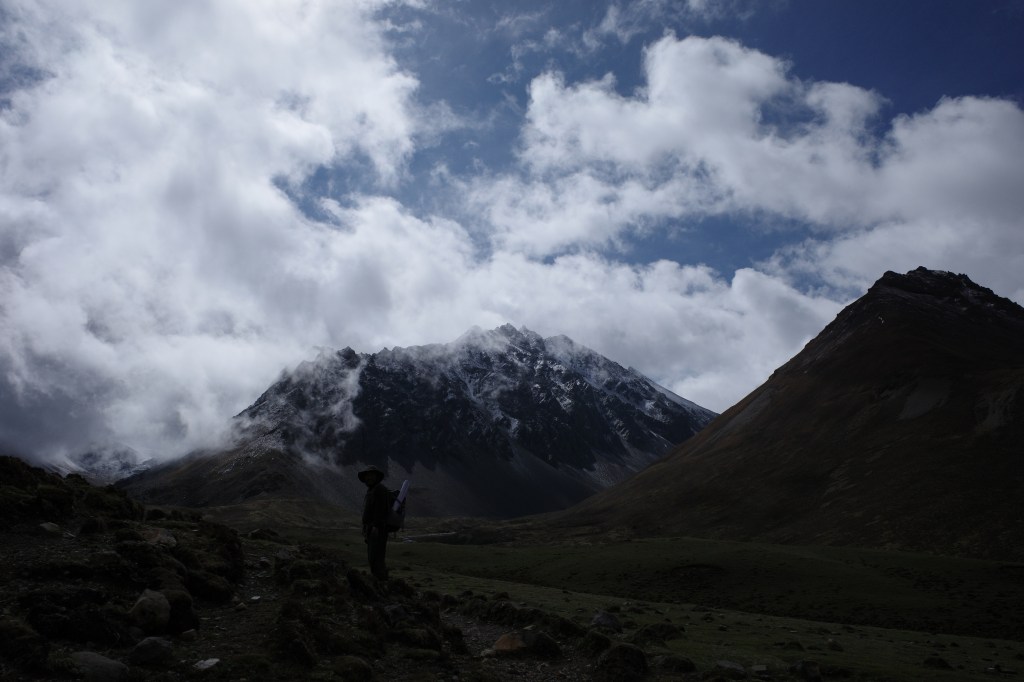
The ascend to the pass went across some old moraines and pastures. The clouds rolled over the rocky peaks around us, providing a mystical atmosphere.
The climb to the pass was straightforward and as our guide again indicated an all time record of his time wise. The pass itself was quite nice, but not spectacular. This would actually (with the notable acception of Karchung la) become a theme of Snow Man. The best views are actually enjoyed before or after the pass.
We descended slowly to Lingshi. As we descended the first setback of the trek was starting to set in. My left knee started to hurt. I was immediately alarmed as Adriaan with whom I had done a hiking expedition in southern Greenland once had to tap out because of a similar injury. This was absolutely no option for me on this once in a life time opportunity to complete the Snow Man trek… The one bright spot was that my knee had actually hurt all the way since I had left home. The heavy lifting from my home renovation work had slowly made an impact. The other bright spot was that of course I did not need to carry anything and the trails were quite easy. Even with an injury I should be able to complete what untrained retirees can do as well right?
As we descended further down we reached Lingshi with it’s renovated impressive Dhzong towering over the village. We set up camp in the middle of the village.
Day 6
As the morning broke, we were treated with crystal clear skies. Ik hiked up back to the Dhzong to get a view of the surrounding mountains and the Jichu drake. It also offered my first glance of the Tserim Gang. As I looked around my feeling of the Bhutanese mountains was again confirmed. Many rolling rocky hills and mountains terminating in a circle of lonely giants.
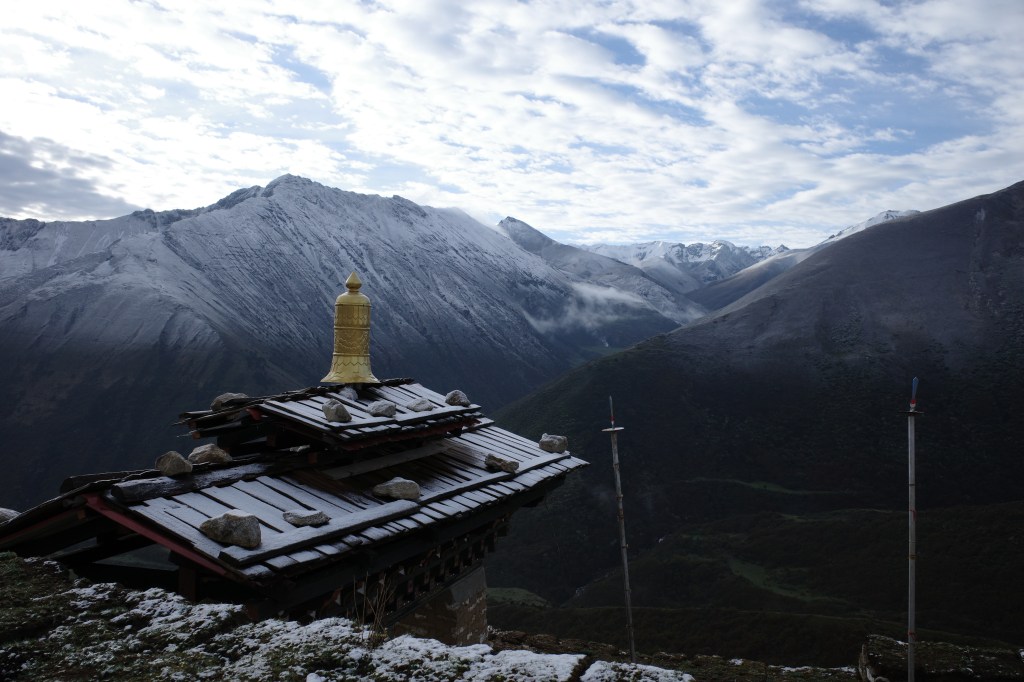
We had our breakfast outside in the morning sun and set out to the next village Chebisa. Today we would combine two short days into one. I think this is a highly reasonable thing to do as the days up until this point had already felt quite short and taking two half days to rest really felt over the top.
As we hiked up over the ridge we got a few nice views over the Tserim Gang. I was getting some hope that we might actually sweep all the mountain tops on this trek 🙂
We descended down to the village of Goyul scenically located at the foot of the glacier tumbling down from the mighty Tserim gang. A little further lay the village Chebisa. Despite it not sitting at the foot of a snowy mountain it is actually one of the nicest villages along the whole trek. Situated along a small stream it’s traditionally built and painted houses really breathed an air making you relive the ancient times in which Tibetan raiders had to be fended off.
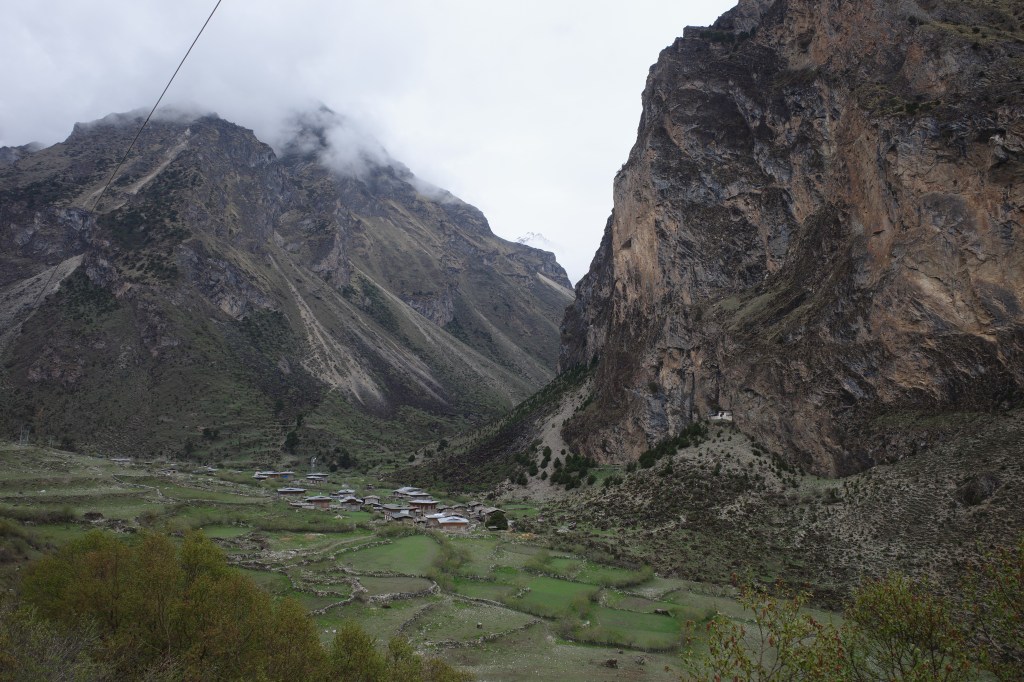
Goyul would be the last settlement until Laya, the one third point of Snow Man. From on Goyul the wilderness part of the trek really begins.
Day 7
Day 8
Day 9
Day 10
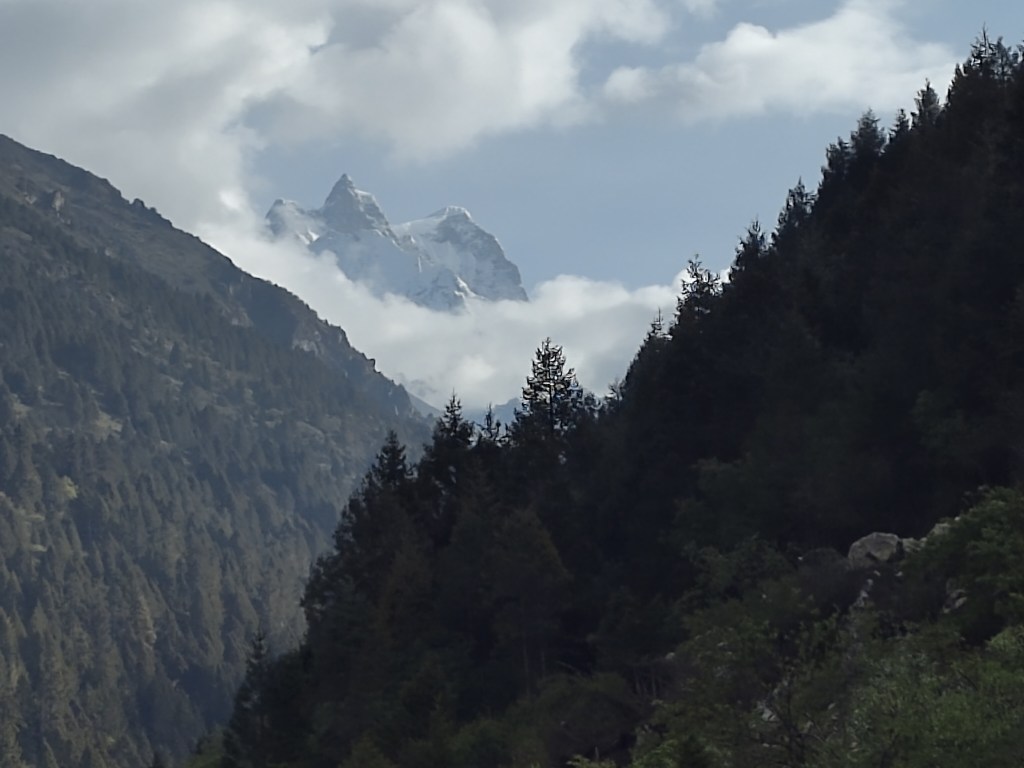
Day 11
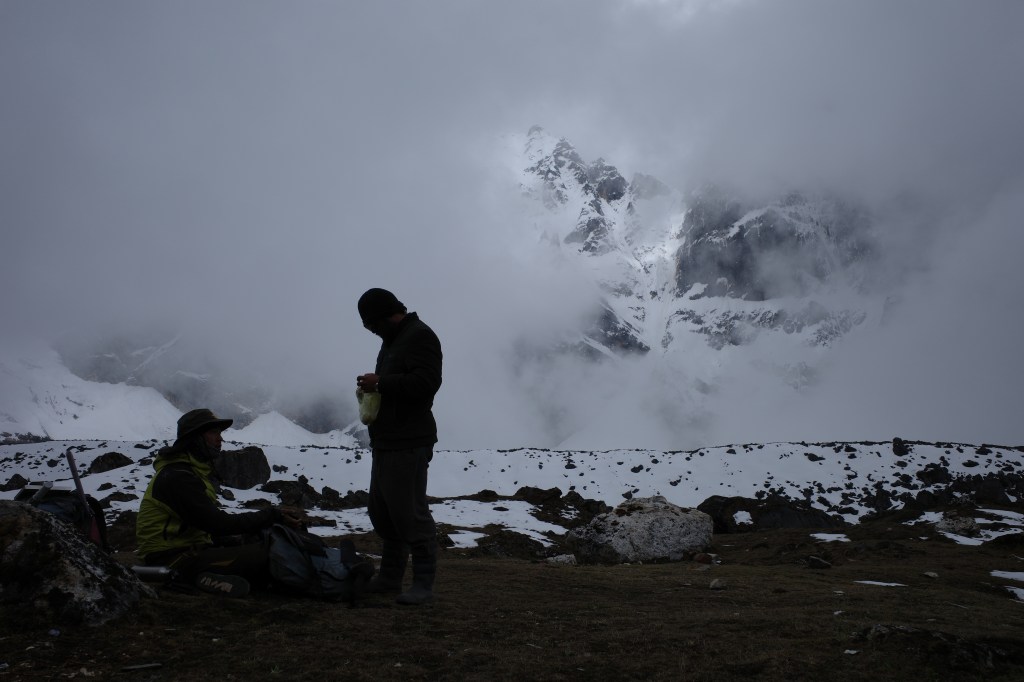
Day 12
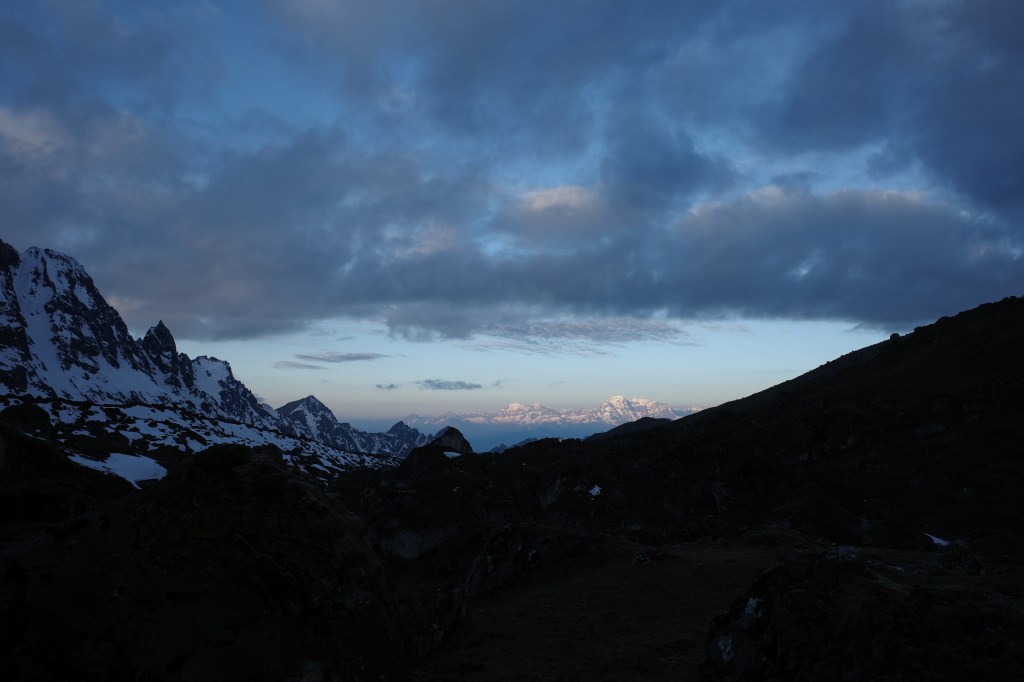
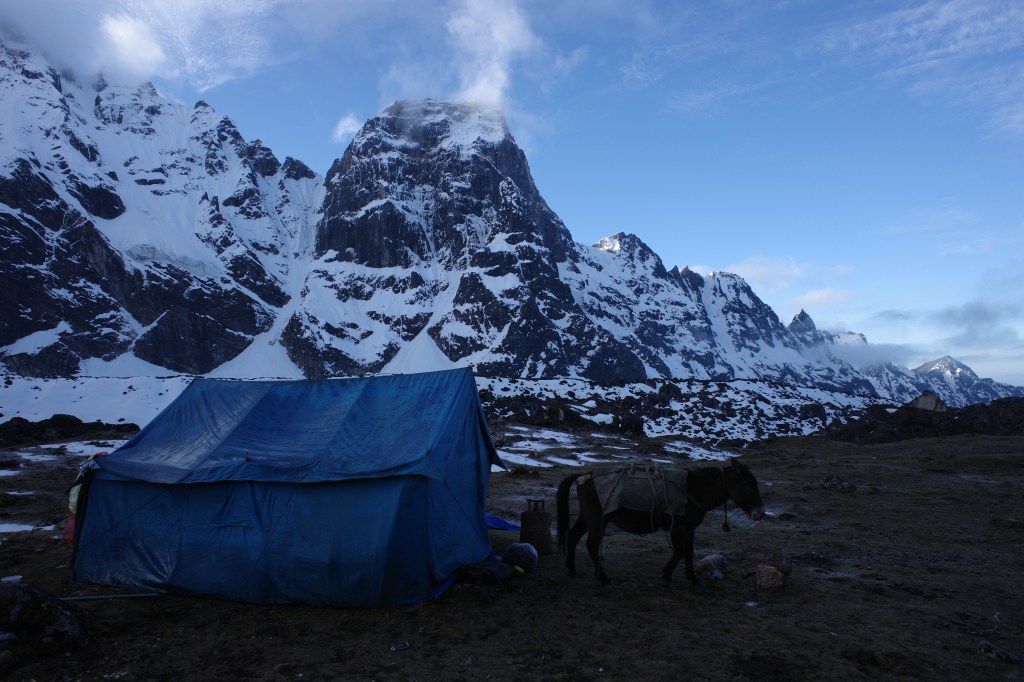
Day 13
Day 14
Day 15
Day 16
Day 17
Day 18
Day 19
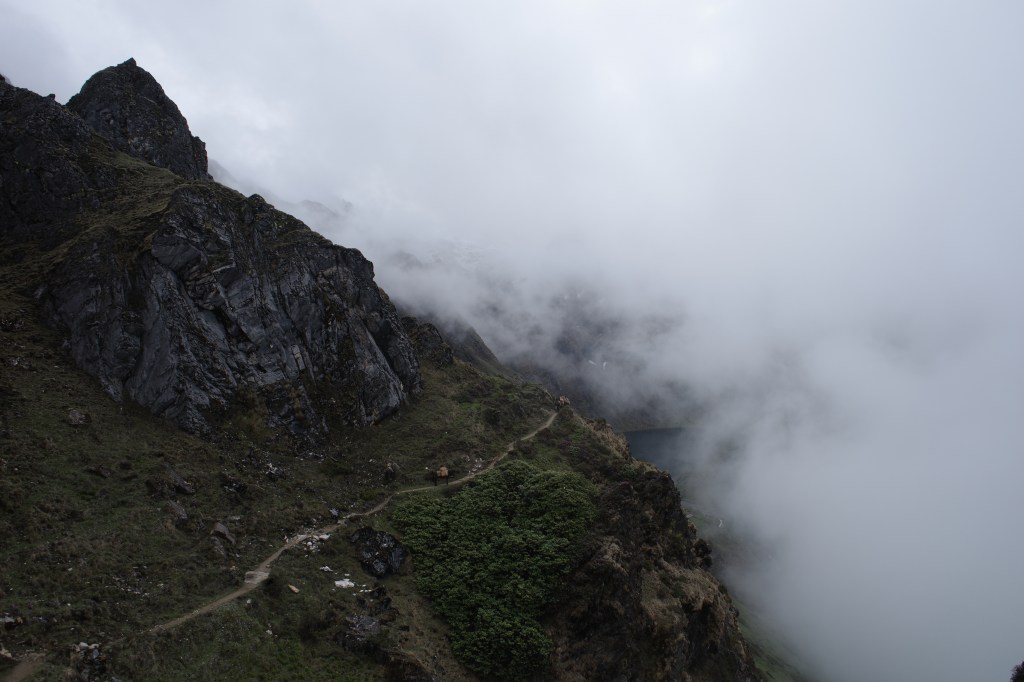
Day 20
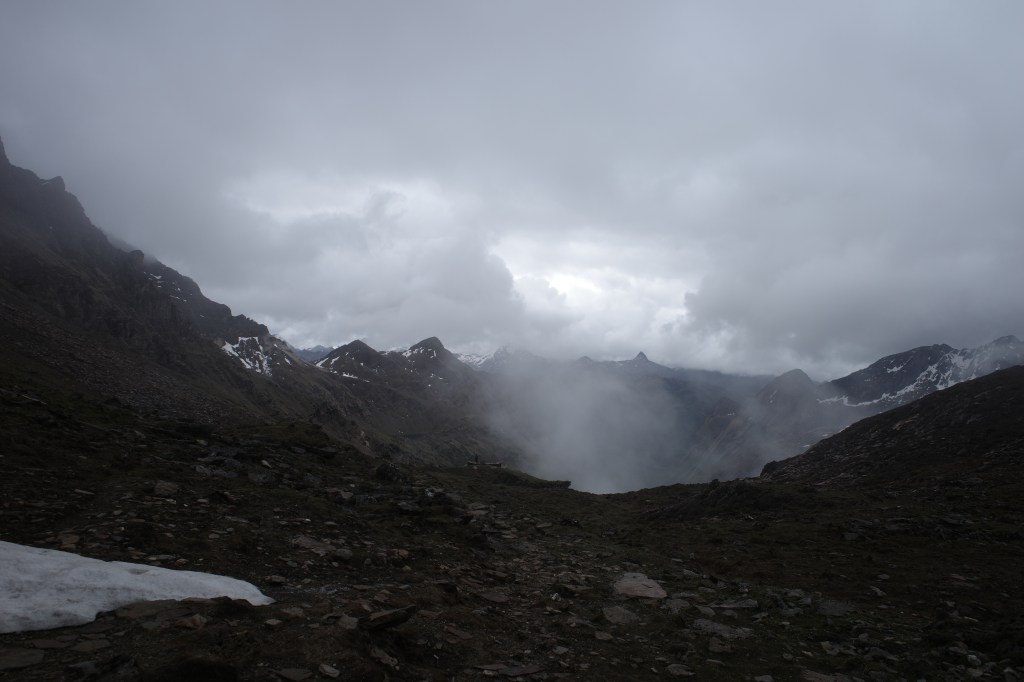
The very last pass of the trek

