
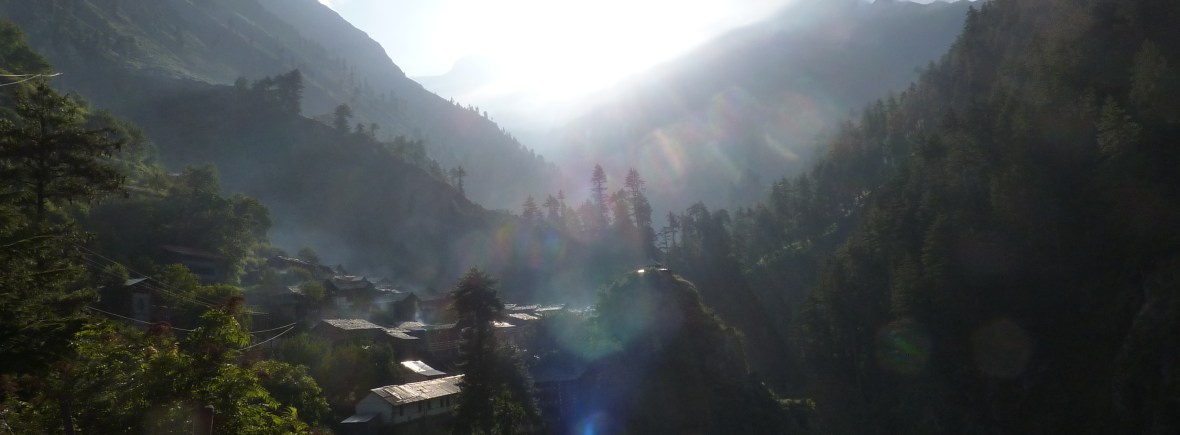
August 2014
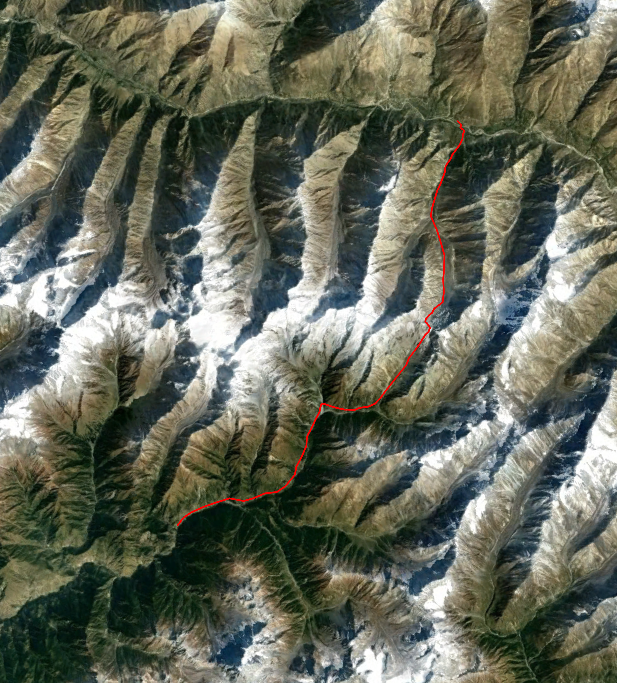
Rapay – Kugti pass – Kugti
Packing list
The trek is technically speaking possible without a tent. There is a small hut before the pass and in a very long day it is possible to reach Kugti the day after. But you should at least take a tarp with you. There might be some shepherds on the way between Kugti and Rapay, but you cannot count on any support.
In case the glacier is free of snow, roping up for the Kugti glacier is a bit overdone. In poor conditions a rope is wise, but not absolutely necessary. Crampons can help, but are not needed. I did not have any technical gear with me, and it went just fine. There is some risk involved however.
Season
The usual season is June to mid-October. The trek lies in semi-rainshadow and can be undertaken in the monsoon without the need of coping with poor skies. I do not know much about winter trekking, but as this region sees relatively quite a lot of snow it is probably not advisable.
Alternatives
There are no variations on the route. The two alternatives for crossing the Pir Panjal are the Chobia pass and the Kalichu jot. I have not been to either of these two, but the Kalichu jot has a reputation of being exceptionally tough.
I did the trek starting from Rapay and ending in Hudsar. If you are not yet acclimatized doing the trek the other way around makes much more sense.
Getting in and out
I myself started in Rapay. Once can reach this village by catching one of the daily buses leaving from Keylong. Keylong in turn is connected by daily buses to Manali. Manali is a major tourist hub with many buses leaving in many directions. Under which of course Delhi.
The trek end ad the road head somewhere between Kugti and Hudsar. The road to Kugti is uner construction and should be finished in the near future. I should be careful saying this as I can find reports from the late 80ties making this same claim…
From Hudsar one can fetch a bus to Bharmour frome where you can transit to Dharmsala. Dharmsala in turn is a major tourist hub. There are many buses both day and night leaving for Delhi.
Day 1
We arrived in Rapay very late in the day. We had to pay attention as there is no such thing as a designated bus stop down here. I used my GPS to determine where we should hop off.
We crossed the river over a firm iron bridge and made our way up to the highest section of the village. Once there it was already dawn. We informed about the possibility of staying overnight with someone and were parked with a nice family with any further ado.
There family consisted of a mother with her husband a mature daughter and a very young boy. The last protested heavily against our arrival in the first hour by crying his lounges out. After that his mood turned around and we ended up playing little games with him.
We were well taken care off and it was very socially. Once the man of the house came back from his daily work it got even more of an event. He liked us staying over and we had a couple of drinks and some proto-English-hindi-ish conversations.

We had only trekked 20 minutes today, but it was already fun.
Day 2
We said goodbye to the family. We left them a nice chocolate bar as a thank you. We had a confusing gesture based conversation in which we thought they said we could return there when we came back. We made clear we would cross the pass, they protested. A bit later I realized that what they had tried to say, was ‘in case of bad weather, do not cross but head back and stay with us another nigh’.

We followed the river up. The trees were soon gone and we were on rocky terrain with here and there some small grass patches. At the start of the moraines we came at a small hut. We considered staying here, but it was so dirty that we decided to head further. Camping closer to the pass would be advisable anyway. The earlier we made it to the pass, the smaller the chance of being up there in bad weather.
We scrambled up the moraines and hiked up on the slopes right of the glacier. We pitched our tent at what would probably the last grass patch.
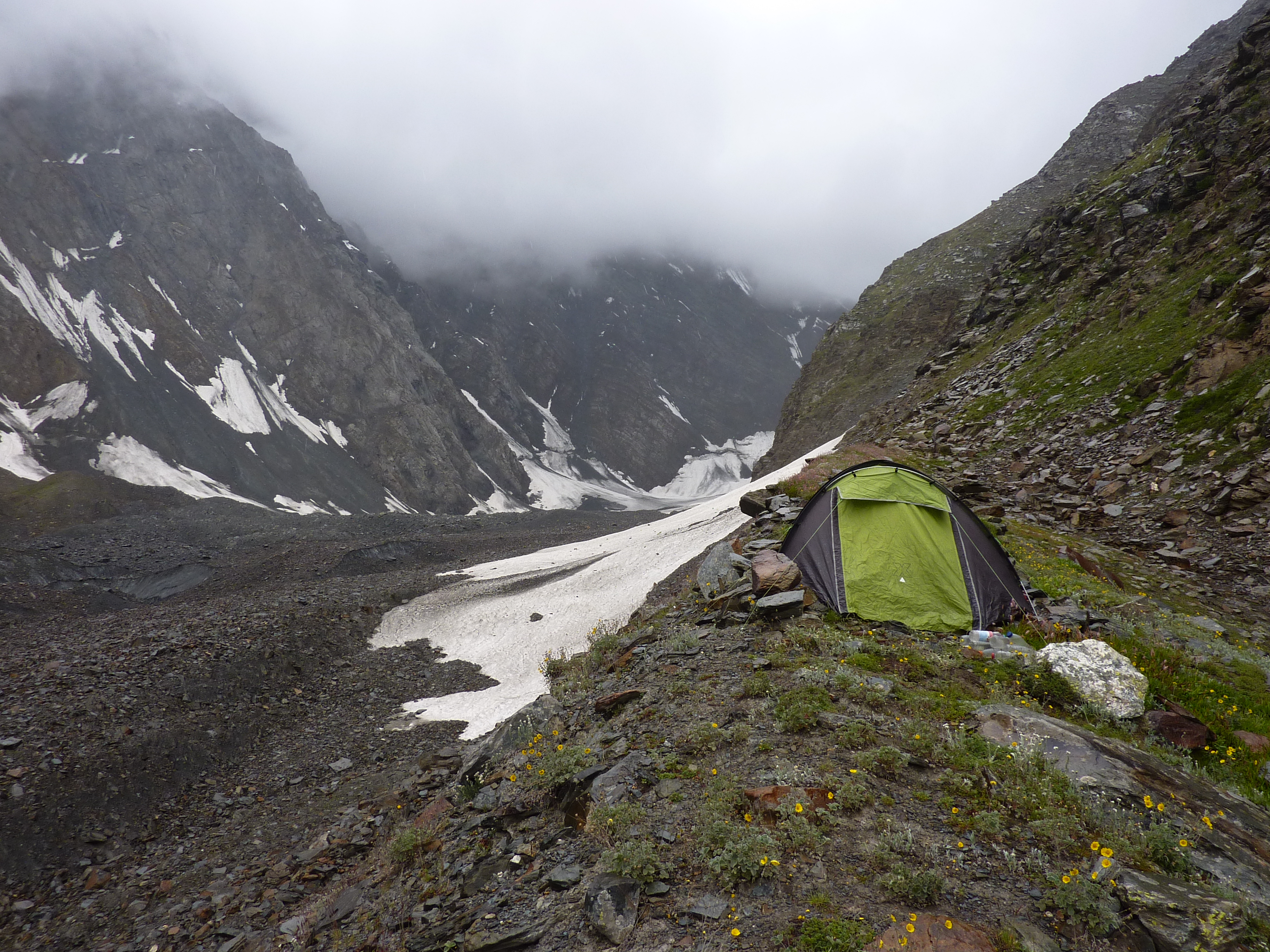
It was still rather early in the day, allowing plenty of time to celebrate my birthday. I got actual trekking socks from Keylong. Thanks!
In the evening I explored the route further up. The slopes right of the glacier got way to steep. I tried to climb them, but I was pushed back. It seemed like we had to hike on the glacier itself.
Day 3
There are many horror stories going around of what the weather can do round here at noon. So I was motivated to leave at or even before first light. Ava and Dennis were less inclined to hurry. We met in the middle and left at 6:45.
The hike over the glacier went swift and soon after we left we reached the end of the valley. A rather frightening looking cliff with a steep white glacier falling down.

The approach to the pass however circumnavigates the steepest sections and traverses up towards the pass following the right valley side. Once almost on top we met a large Indian trekking party, who were surprised to see us. We said hello and climbed the final meters to the pass itself.
The pass is full of tridents and red lints. The difference between the Lahul and Chamba sides was rather striking. Lahul was rather barren, whereas the fields of Chamba were bright green.
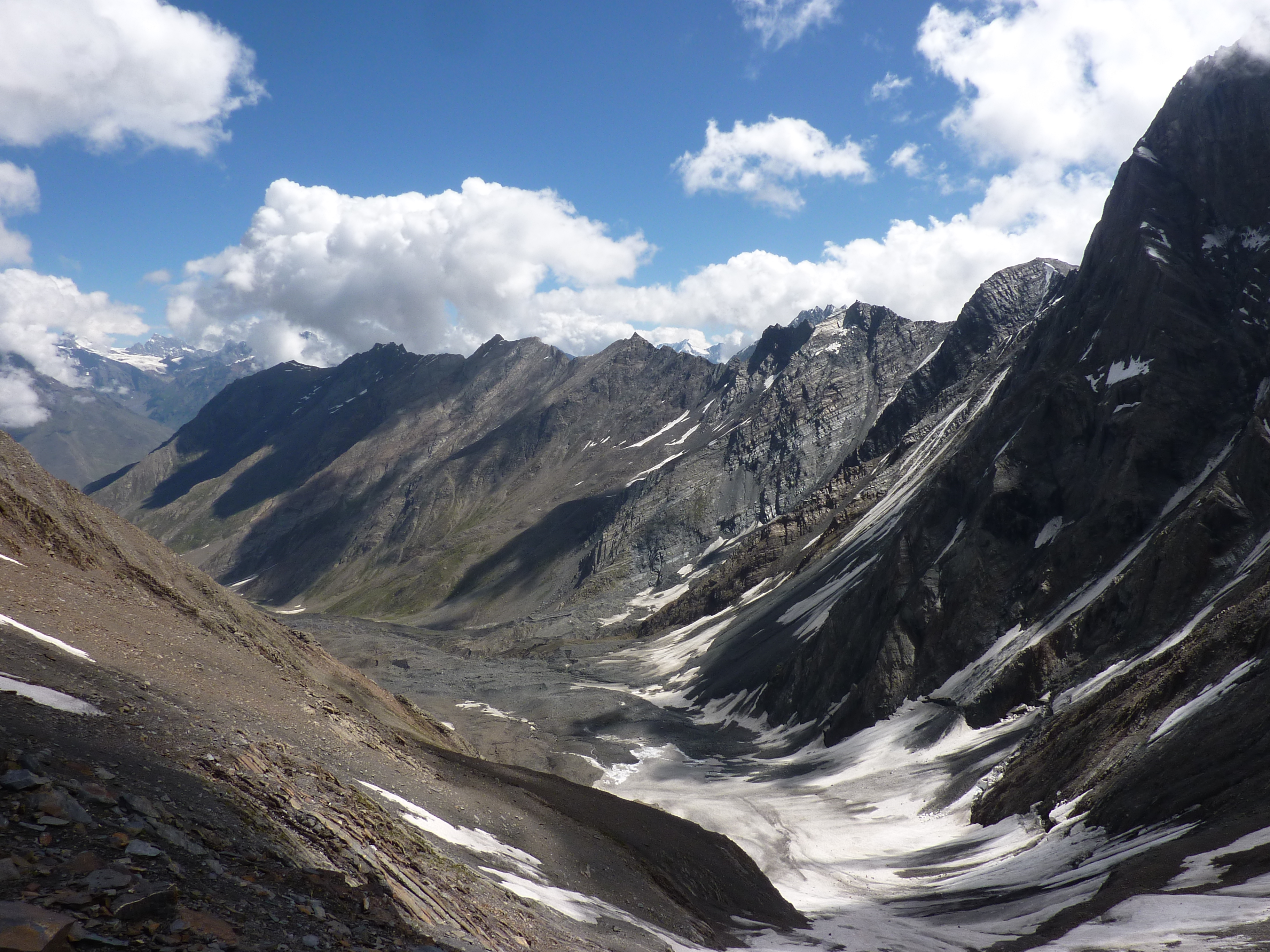
The first part of the descent went over steep rock. We really needed our hands all the way. Once the rocks met the glacier it was a slippery way down. We had no crampons with us, so we had to think about what we were doing here. There were a few crevices, but nothing to worry too much about. The entire glacier was sown with goat feces, a kind reminder that this was a sheperds trail. The animals must be rather nervous when crossing over here.
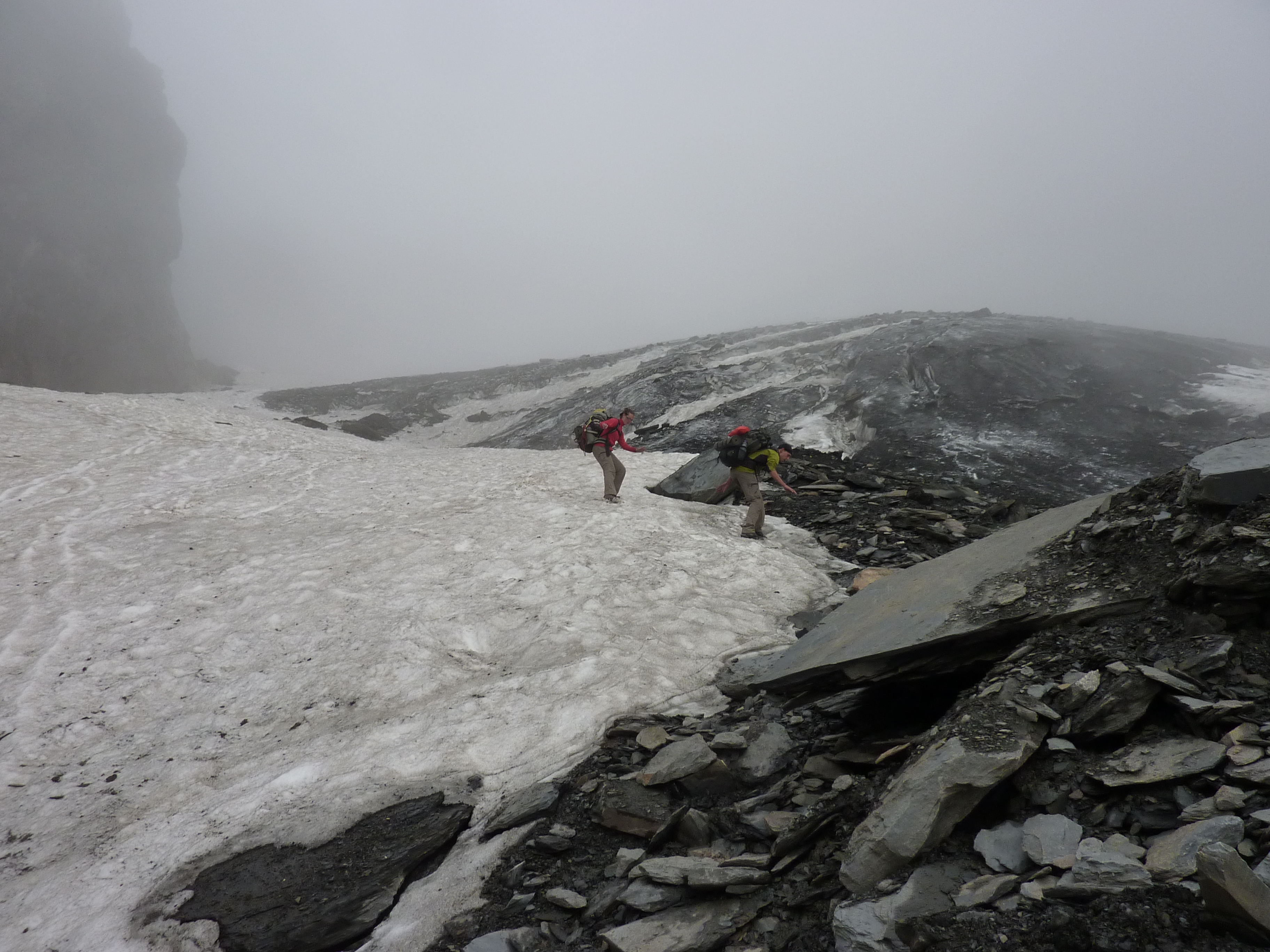
While on our way down, more and more clouds kept rolling in. The clouds lay thin though, we could feel the sun through the cloud cover. By times we could not see a thing, by times we could see the start of the green pastures below us. We could not wait to get down there.
Once our feet touched the first grass we immediately lay down and eat lunch. Now and then we had a bit of sun and we napped and hung around till the moment we decided to just pitch already.
Day 4
It was sunny in the morning and we had finally an unobstructed view to the Manimahesh range south of us. The glaciers, peaks and wildflowers looked very friendly in the morning sun. It would be just a matter of hiking downstream now. Most of the time there was no trail, but the meadows made up for easy hiking.
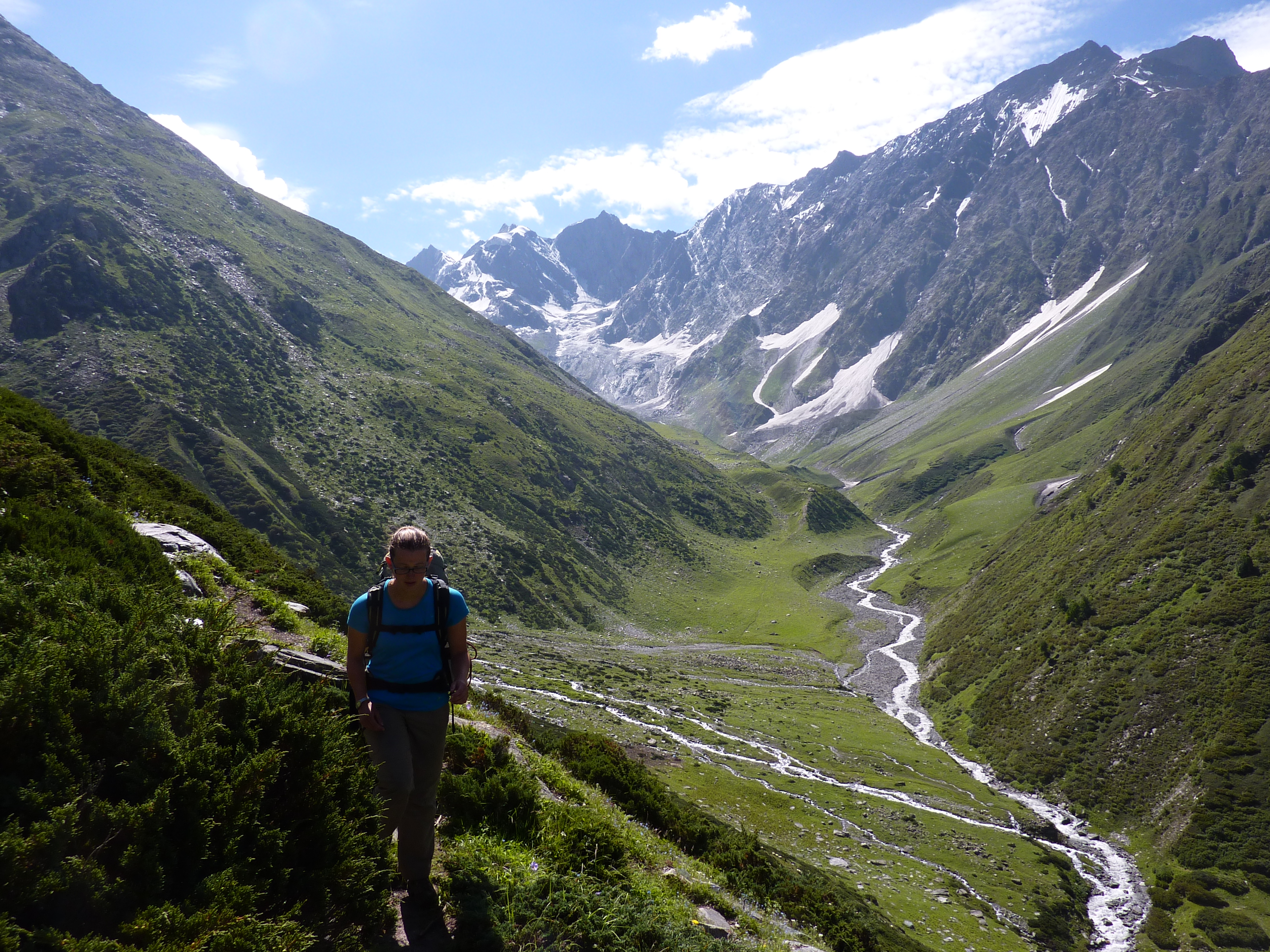
On the way we had one little tougher side creek to cross, but that was the only small complication we encountered that day. On the way we met a farmer who asked whether we had seen a cow that he had lost.
Around noon we got to the tree line and the trail got broader. Just before the Kugti village we came along the Kugti temple. The bathroom tiles were a macabre reminder of how many goats were probably slaughtered here yearly.
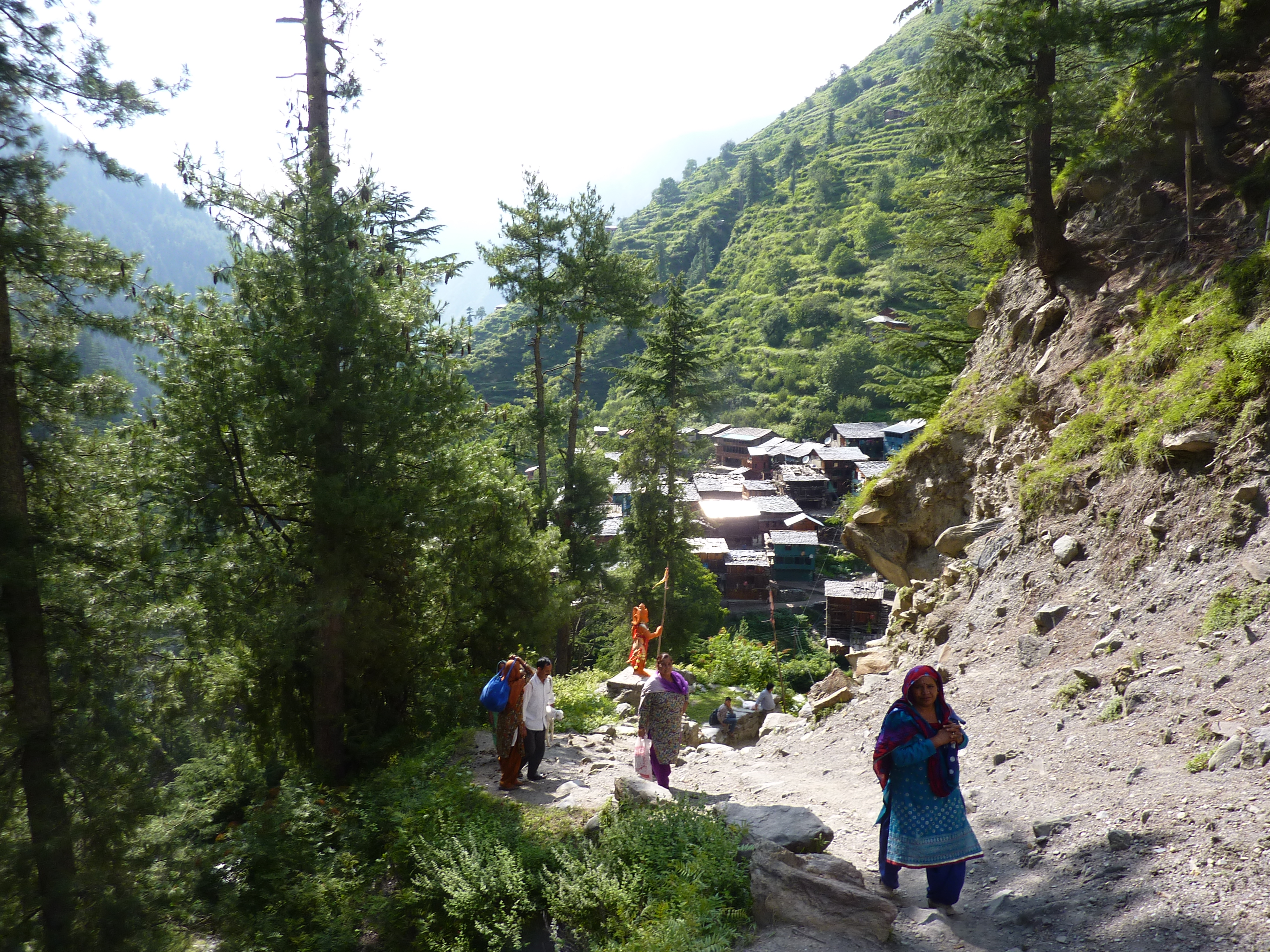
Kugti is way larger than I had expected. There are easily 300 houses in this colourful village. In contrast to Lahul people down here are Hindu, which showed both in the statues as well as clothing. We hiked through the rather picturesque village in search of some rest house or home stay.
We asked around and got a large attic with all the dal bhat we could wish for. From the balcony we could see the lush surrounding mountains. In the evening we could even see a black bear on the other side of the river. The villagers immediately opened fire, so we could not enjoy the sight for long…
Day 5
We left late in the day and before we did we had a firm breakfast and grand tour through the village to say hello to some of the extended family.
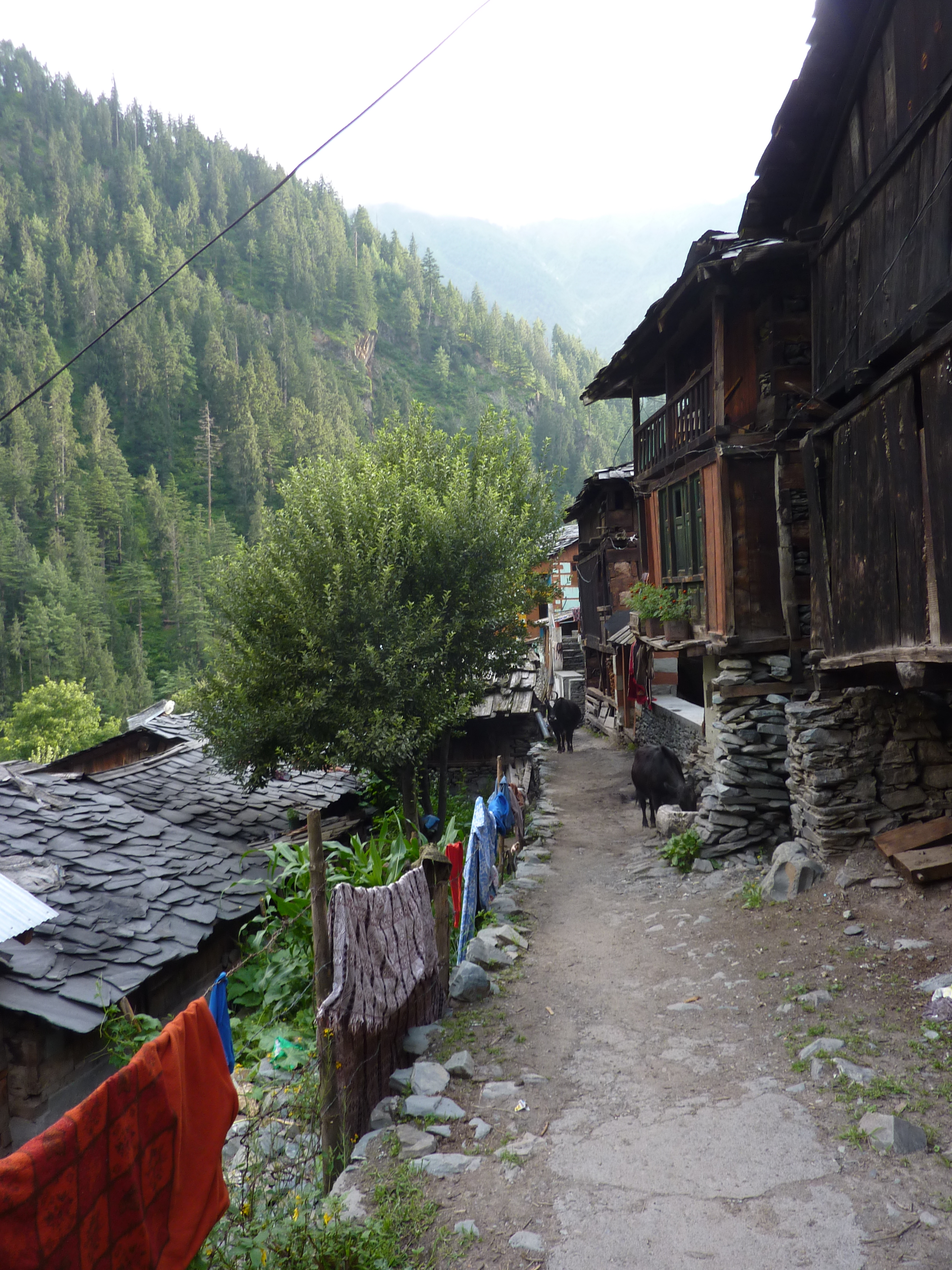
We left the village behind. It stung me a little. I do not know why, but something had made me fall in love with this place. The last few kilometers to the road head went over a flat and large trail. We made it down there in just over an hour.
They were buzzy constructing a road towards Kugti itself. I hope this will not take the magic away from this place in the future. But as I read reports of this road already being under construction as early as 1985 it might not go this fast…
We had some lunch in a teahouse and waited for the bus to Bharmour.
 Last frontiers on foot