
December 2014
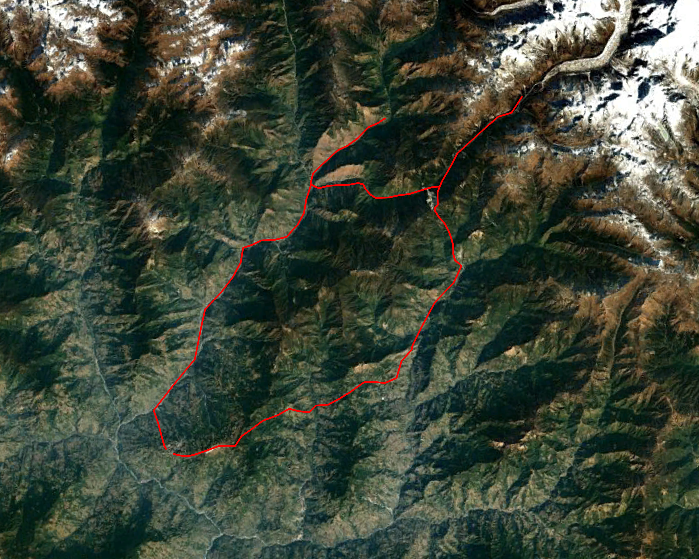
Taplejung – Yamphudin – Lelek – Amjilosa – Chiruwa – Taplejung
After having visited the Everest region I looked further east to find mountain splendor far away from the crowded central Himalaya. Rumor had it that in this remote corner of Nepal, you could find mountains that could compete even with those in Solukhumbu.
I decided to make it another winter trek. It would come in handy with my Christmas holiday and last year I had had a great experiences at this time of year. Clear skies and few people. Unfortunately , this time, the weather was not with me. Me and my guide Iyam were pushed back by heavy snowfall and we never made it to the base camp itself. I did learn my lesson and it it is till this moment the last winter trek I have ever undertaken.
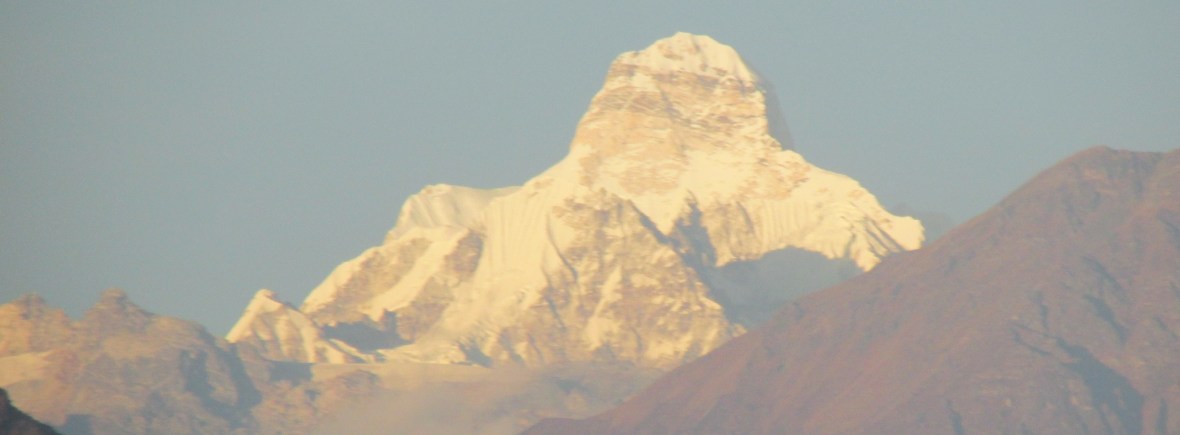
Even though I could not get high up in the mountains, the Kanchenjunga massif and the Taplejung district made a deep impression on me. The alpine beauty round here is second to none. The remoteness and quietness, especially in winter, was downright amazing.
Season
Well… December might be possible, but as it turns out it is quite a risk. Mid-November to mid-December is the better bet. Peak season is October and trail can get a little crowded, but nothing compared to the popular sections. Spring time from mid-March to early June should be great as well. The Nepalese along the trail told me that monsoon was worse here than in other places.
Packing list
In the season this trek can be done fully teahouse based. There is no reason to bring along a tent or cooking gear. This has only recently become the case so most people bring more than they need to. Even though the Kanchenjunga circuit can be completed as a teahouse trek, it is a bit more basic than around Annapuna and Everest, your own sleeping back is still a must.
Out of the season Early December to February a tent and more elaborate gear is essential.
I’m unclear about conditions during the monsoon. Somebody should try this some time.
Even though Selele is not a particularly high pass, it has a tendency to get snow blocked. Crossing this pass in early winter or early spring is not guaranteed.
Getting there
The starting point of this trek, Taplejung, is quite a struggle to get to. Even by air it will take you some time. To reach here by air you need to take the morning flight from Kathmandu to Badrapur. Due to the unfortunate schedule of flights you will need to stay overnight before taking the flight to Taplejung.
For some cost saving it makes sense to use the bus for one or both of these section. Since the bus to Badrapur is a nightbus and since you can immediately transit to Taplejung in Badrapur it hardly takes more time.
The bus for Badrapur leaves Kathmandu at around 4 pm and arrives at around 8 am. The ride to Taplejung takes another 13 hours, if you transit immediately you need to split the journey in Phidim or Ilam.
The way back goes much in the same fashion.
Day 1
I arrived with my guide Iyam rather late in the afternoon. We had taken the plane to Bhadrapur after which we took the overnight jeepride to Taplejung itself. The skies were crystal clear and I had every opportunity to admire the Kanchenjunga massif from afar.
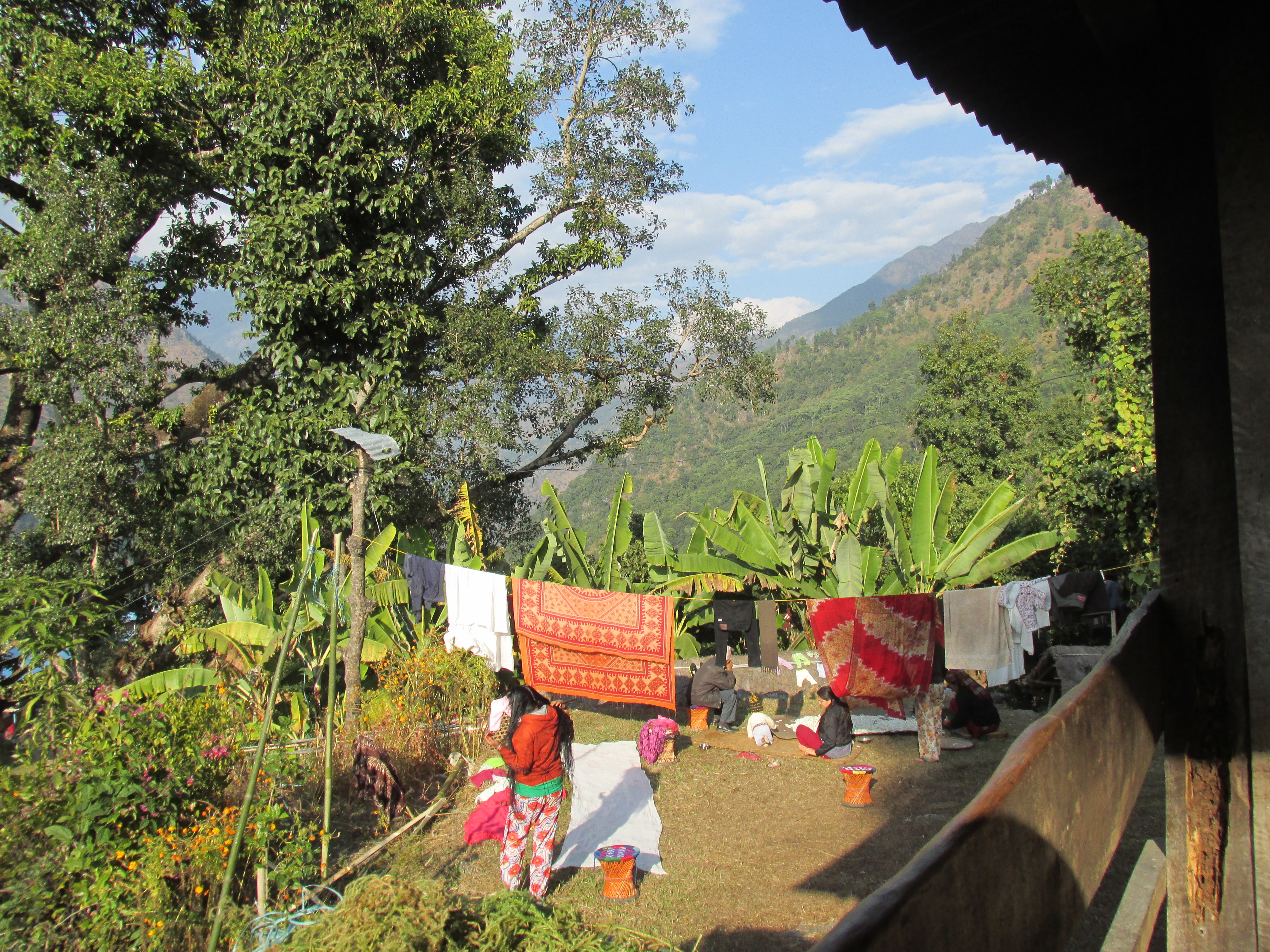
After some quick lunch we climbed up to the airport and descended to the small village Lalikharka. I immediately fell in love with the southern foothills of Kanchenjunga, beautiful scenery and a cozy teahouse with a home stay feel.
Day 2
We woke early. Due to my jet lag I hadn’t slept all too much, so I was glad when we could finally rise. Today’s hike went through typical Nepalses countryside. Green hills with white mountain tops in the distance. On the way we came across many small colourfull vilages.
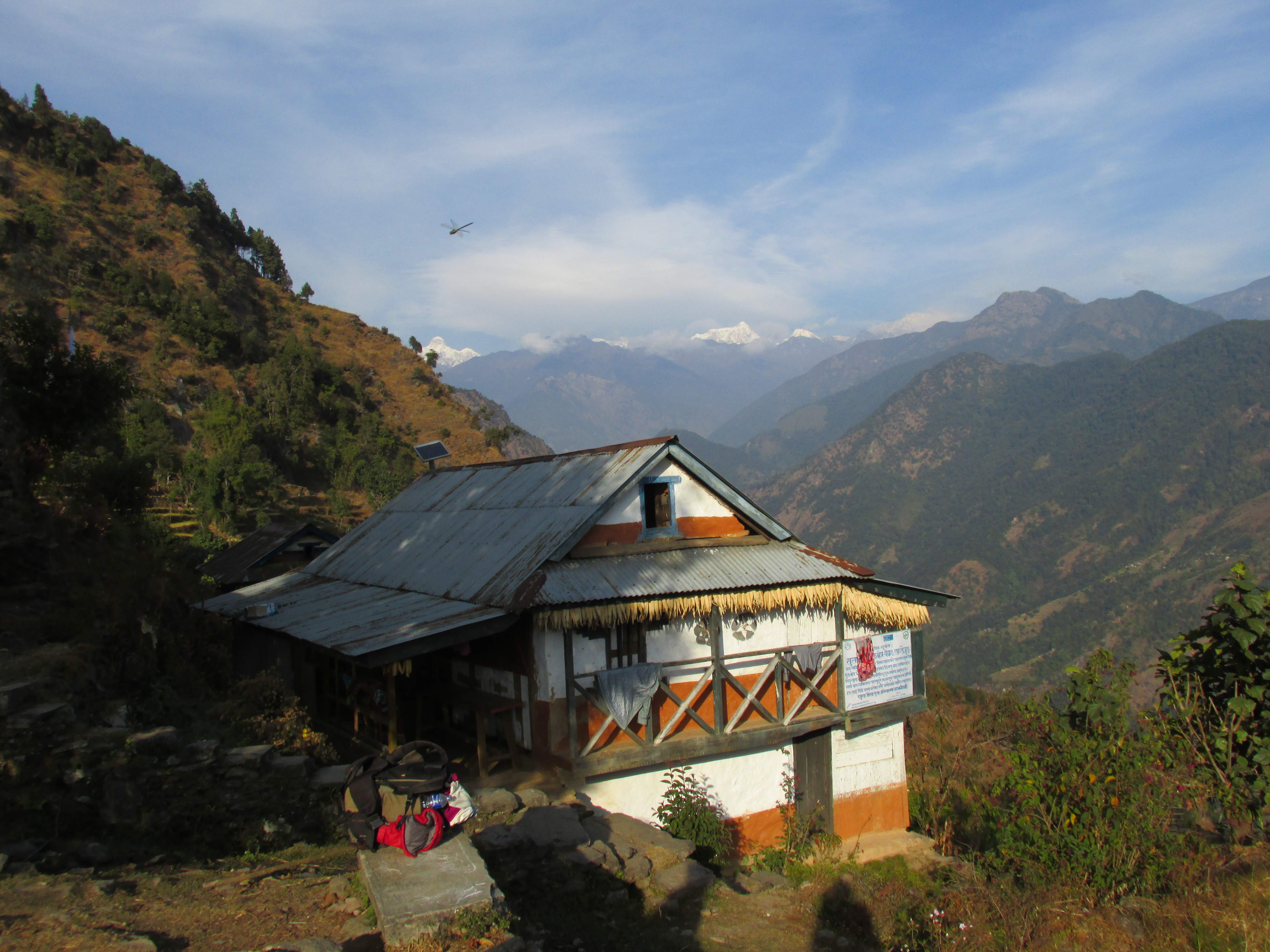
After a long day of hiking we reached our final destination of that day, Pumpkhe. We arrived quite late and since it was winter the sun was already setting. The children of Pumpkhe packed up their improvised goals and their balls and came to sit around the fire. Dinner would be ready soon.
Day 3
Our destination, Yamphudin only lay 3 hours further. Yamphudin is the last settlement on the way so we would need to supply there for the rest of the route. My guide Iyam was extremely nervous and wanted to inform in Yamphudin about the route over Selele. Iyam was forced by my tour agent Nava to accompany me, but it was plenty clear that he did not at all like the idea of having to cross Selele in December.
On the way we came across a check point. It was abandoned, so our permits remained unchecked.
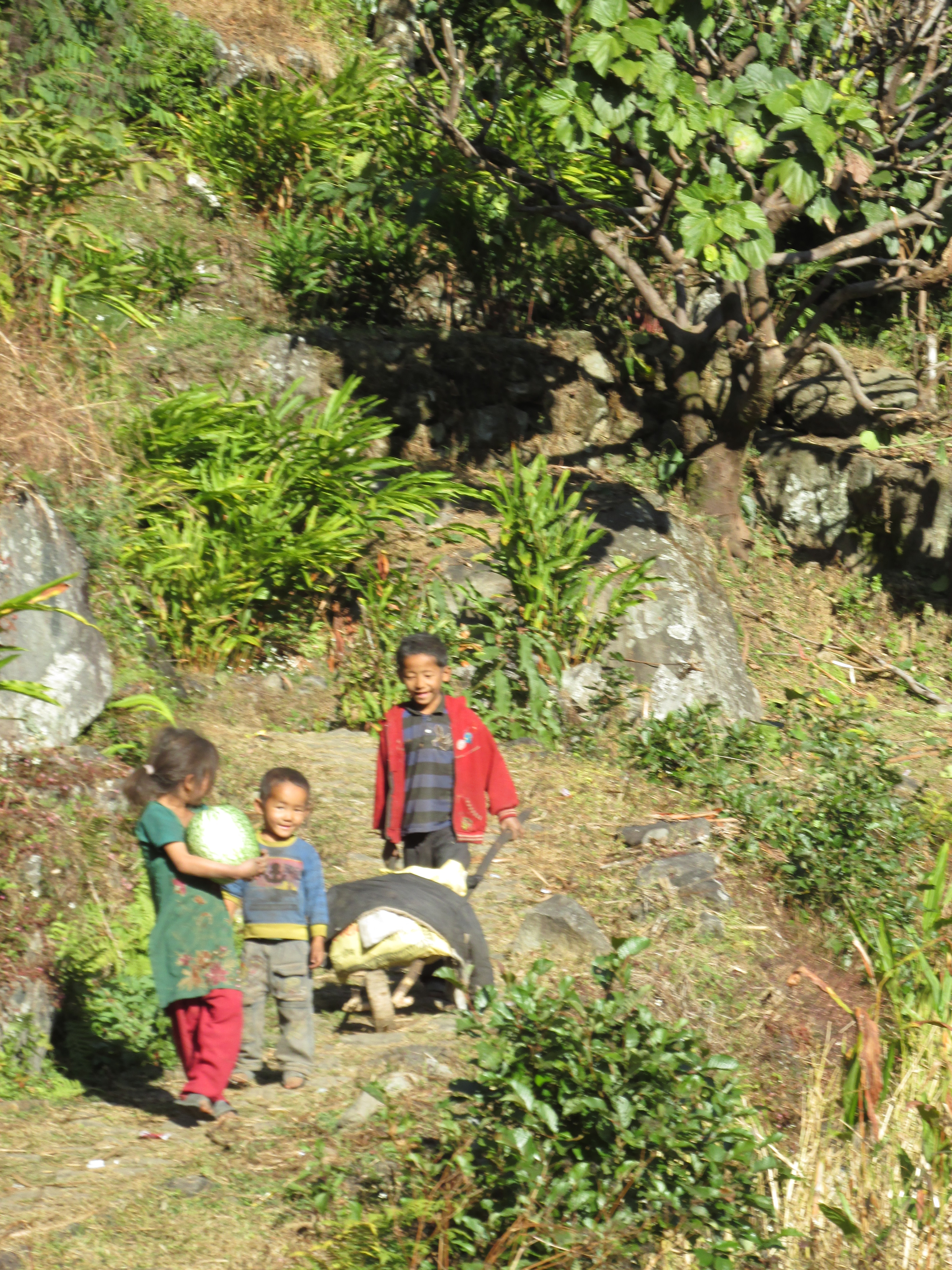
The Buddhist settlement Yamphudin lay not much further beyond the checkpoint. We could stay overnight in a large teahouse ran by a rather stout family head. He and his family were preparing to cross over the Umbak la to their relatives in Tibet and I would be their last guest of that year. The man must have thought to better make this last guest worth his while as he squeezed as much money out of me as he possibly could. If it had only be the food and accommodation it would have been manageable, but as my guide insisted for me to hire an additional local guide I had to go through him to hire another guide I was not waiting for. Iyam tried to bargain a bit on the price, but each time he did so the price went up. Well I just paid the tremendous amount so that I could just go on my way already.
Day 4
Early in the morning I could see the family and their yaks leave. It was quite a special moment to see these people start their migration on foot towards their relatives in Tibet about 70 kilometers north.
I myself and my two guides (sigh) statrted to climb up the Limite Bhanjyang. My second guide was a modest and hard working man from Tibetan origin. He did not speak English and had to communicate via my guide.
The view south from the pass was stunning. Countless green hills through the mist. The Mahabarata mountains are in many respects just as fascinating as the Himalaya itself.
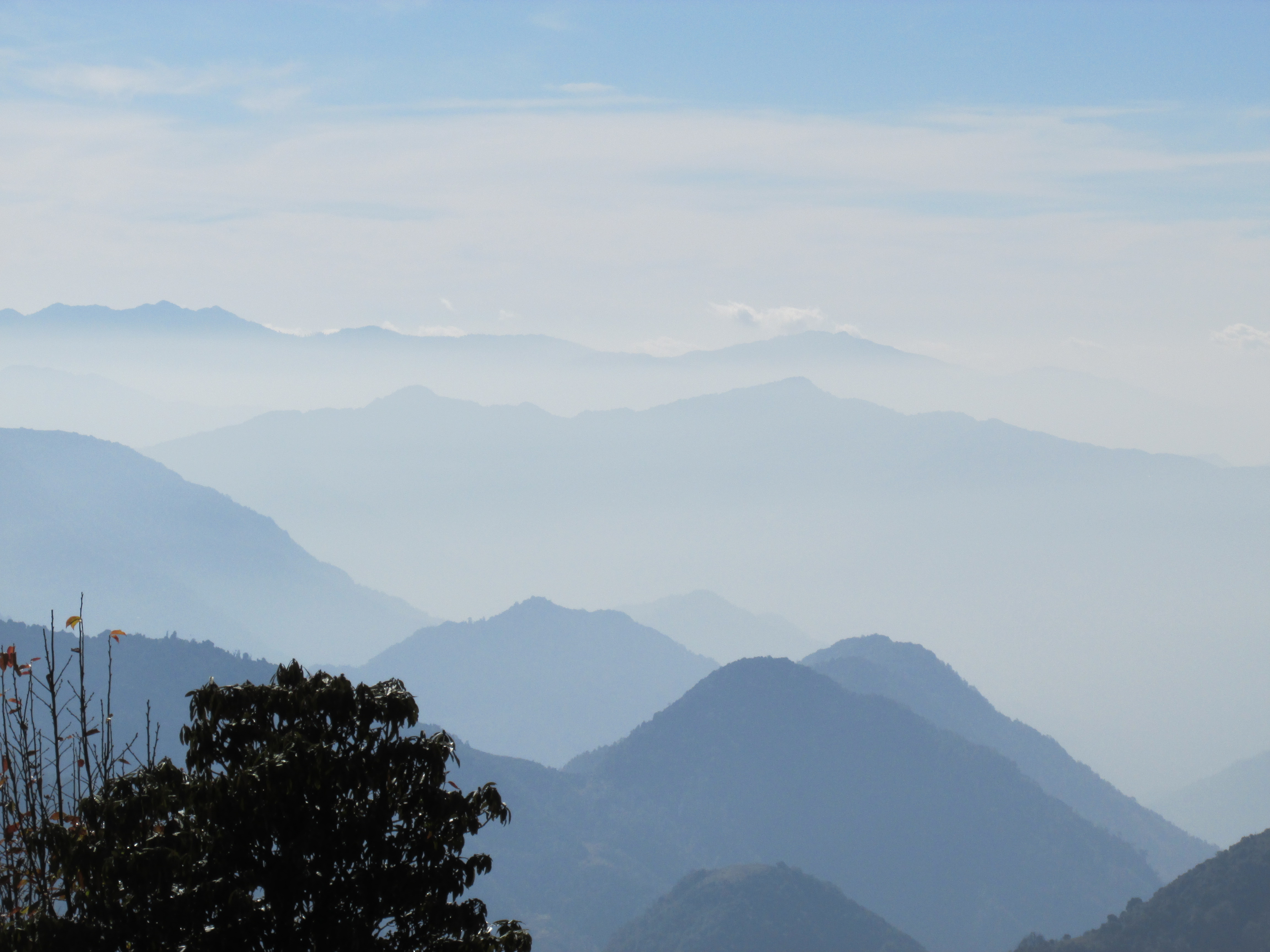
Down from the pass we came across Tortong, a small lodge that is usually open in spring and autumn. We just placed our sleeping backs on the balcony and made camp their.
Day 5
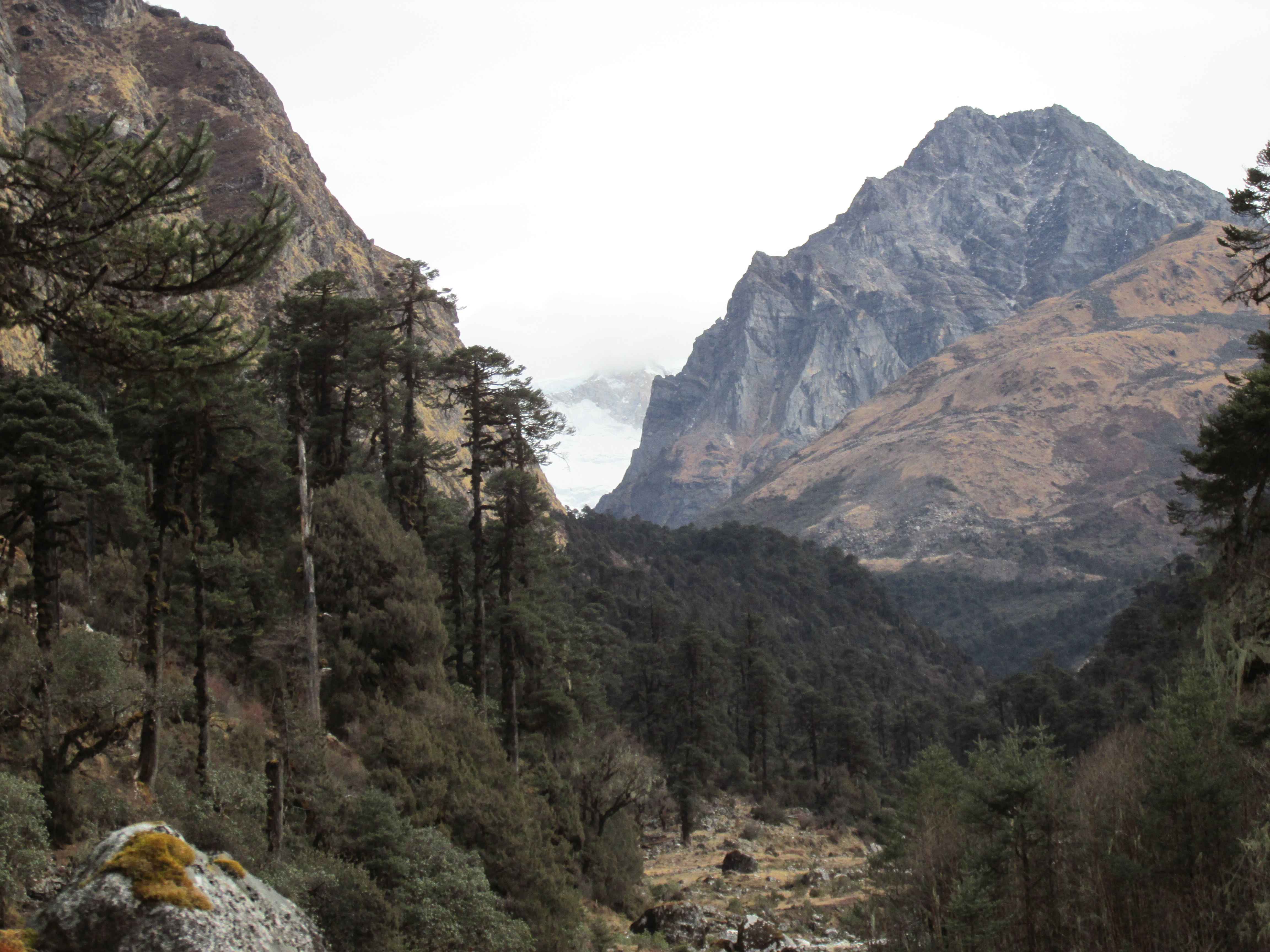
We would press on to Tseram and sleep there. Our guide had the key of the lodge in Tseram so we could sleep inside. In the evening a high hanging cloud rolled in from the south. That does not look good, my guide said. I was afraid I had to agree.
Day 6
I woke in the morning and immediate went outside to check meteo. It was misty and there lay about one feet of snow. Is it clear my guide asked. ‘Not exactly…’ I replied. My two guides came out and immediately got nervous. The Nepalese always get nervous when they see snow up in the mountains. A justified fear as getting snow blocked is a serious risk. It was clear that Selele would be snow blocked under these conditions and that we needed to retreat. We ate some quick breakfast and headed back.
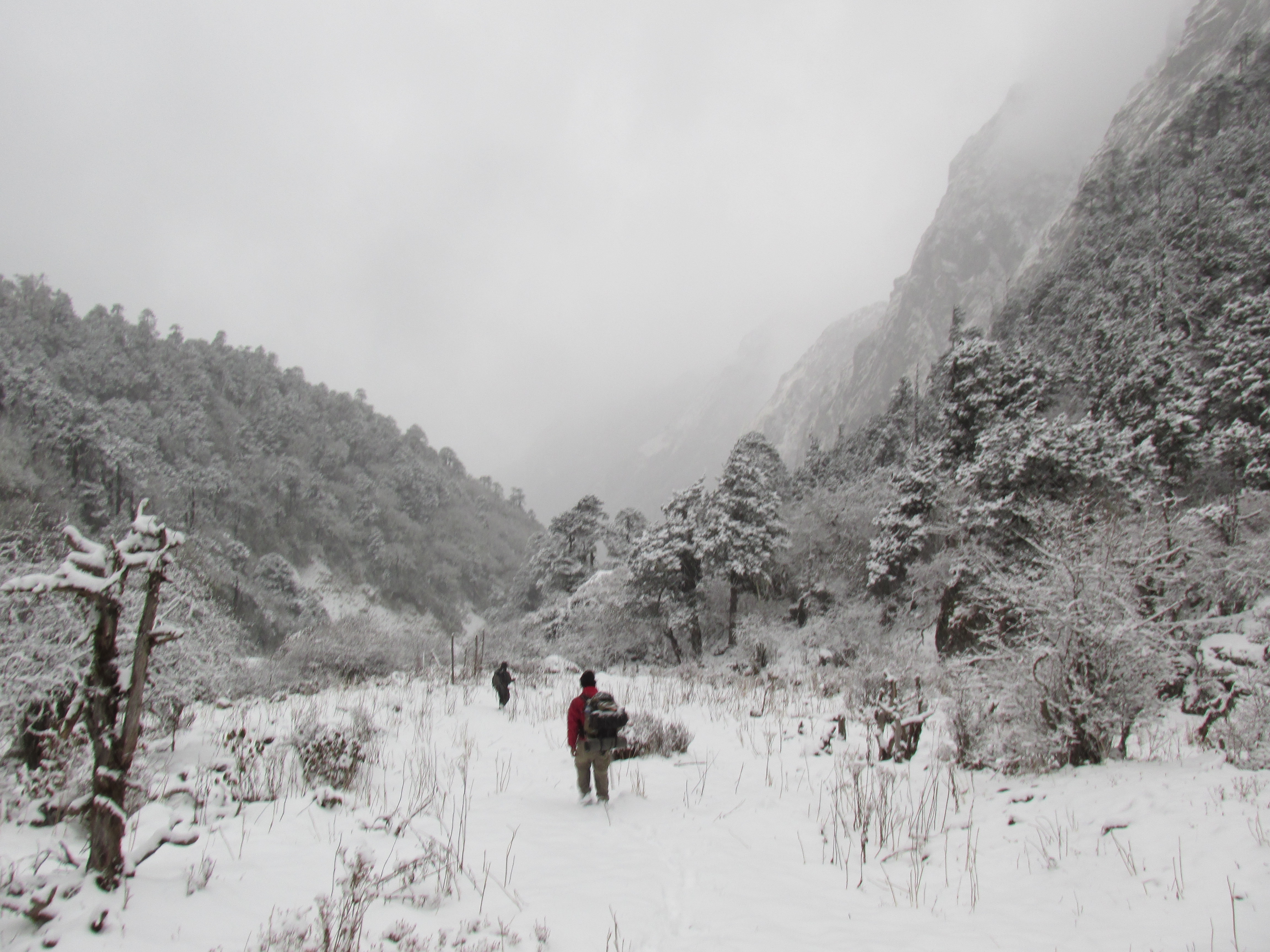
We retreated all the way to Tortong. As I still wanted to head to the Kanchenjunga base camp we did not cross back over the Lamite Bhanjyang but instead followed a small seldom traveled trail through a narrow valley.
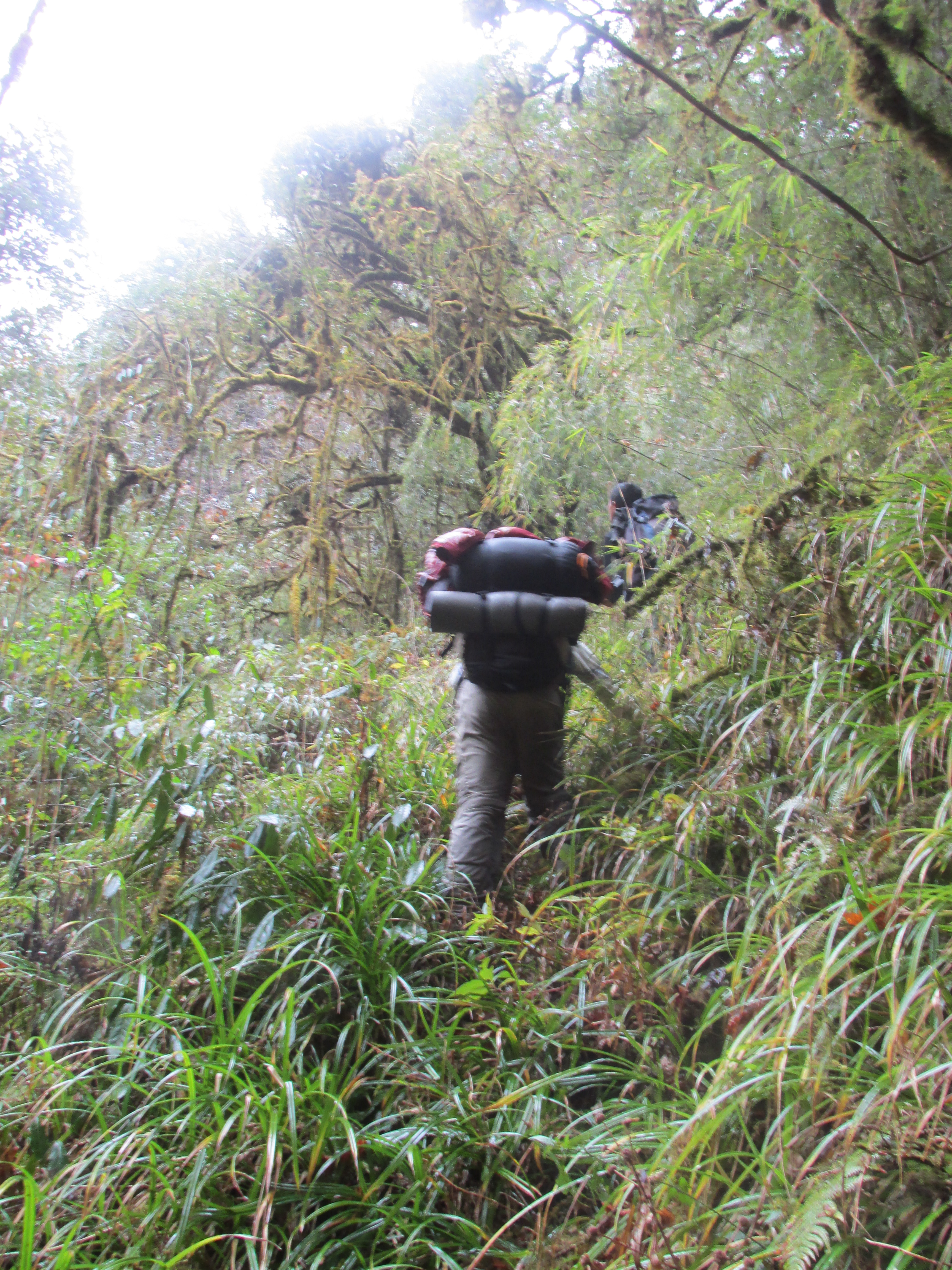
The trail kept on going through the dense shrubberies, it never seemed to end. On top of that it rained the entire miserable day. We had to go all the way to Lelep as there was no reasonable spot to camp along the way. Around noon we crossed paths with a black bear. Due to the dense vegetation the bear was extremely close before we took notice of one another.
We had no lunch and just kept on going. When the sun started to set we finally stumbled in the first small village. A family took us in. I had gotten colder than I thought and spent the next hour in bed before coming out for some well deserved Dal Bhat.
Day 7
When I woke the weather was clearing a little. We waited for the clouds to open up a bit further before heading out. Waiting was no boring as the eldest child in the house was a very intelligent boy who spoke an impressive amount of English.
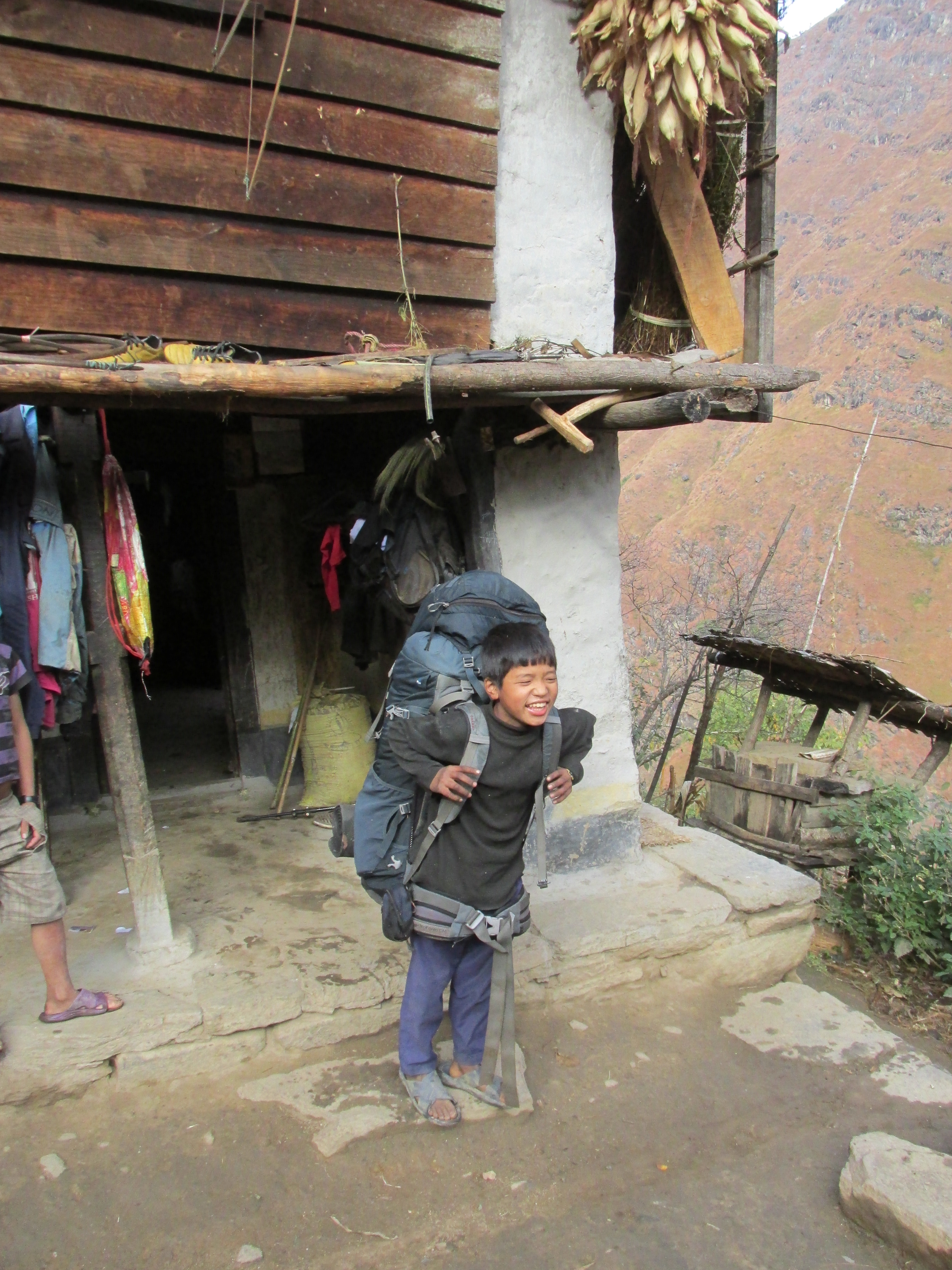
We said goodbye to our ‘additional guide’ and left for the Kanchenjunga base camp. My guide was still willing to go there as long as there would be no more snow. I was a bit nervous, I knew that my guide was on the brink of heading back to Kathmandu. As we walked down to Lelep the weather however looked promising. I even felt the sun on my skin again.
From Lelep it was a long and steep climb to the village of Amjilosa where we stayed overnight.
Day 8
Iyam woke me in the night. It rained cats and dogs. It was over. Disappointed I went back to sleep. There was no way I would get Iyam to accompany me any further.
In the morning we hiked back down. I had lead in my shoes. I had set my mind to reach the base camp, but it just was not going to happen. Had I been with a friend instead of with a guide I would have at least been able to try.
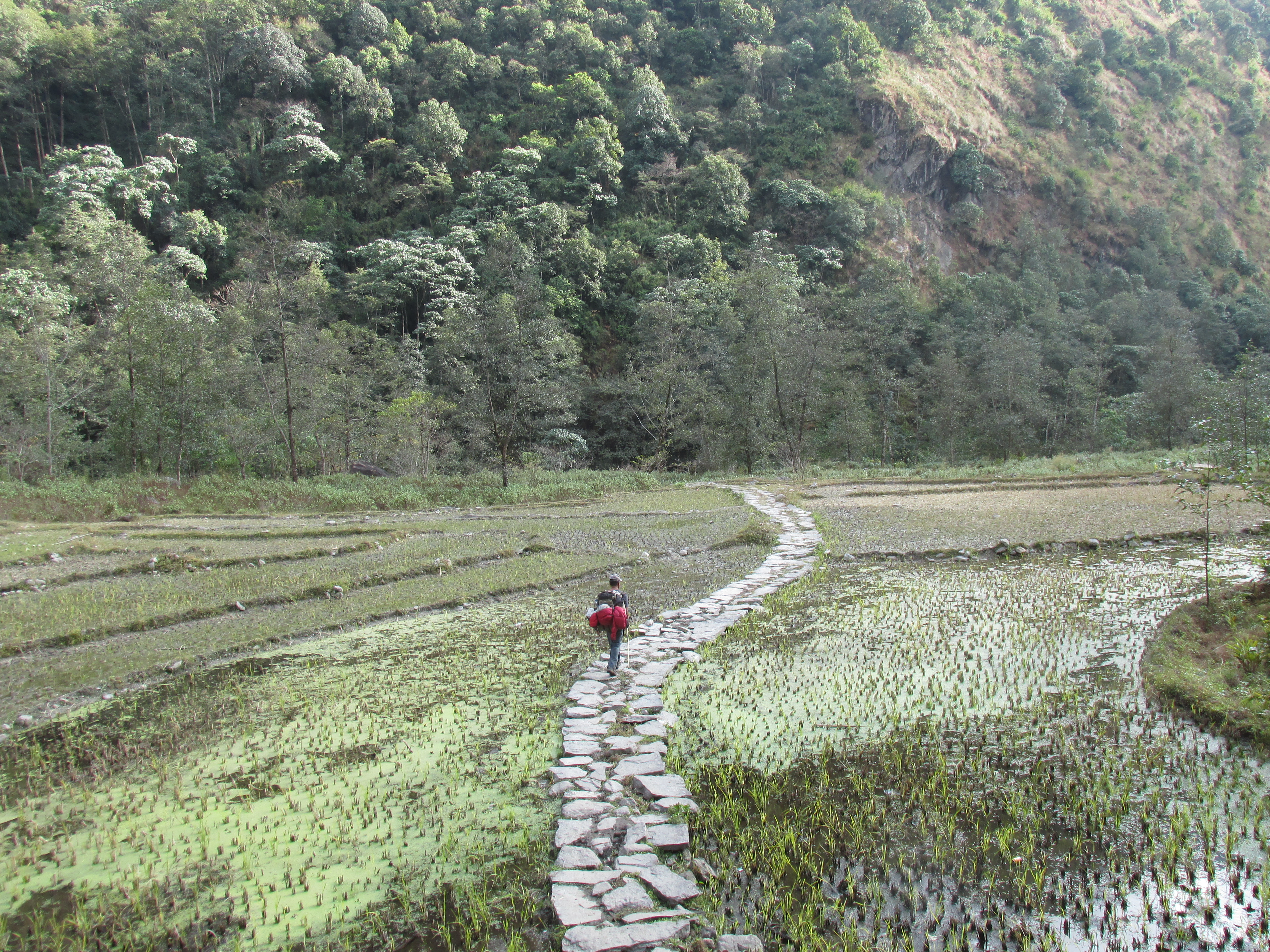
For the rest of the day I was thinking what I was to do with all the time I had left in Nepal.
We stayed overnight in a lodge in Thiwa. I had gotten over the worst disappointment and was able to enjoy this cozy village whose houses were built under or into large boulders.
Day 9
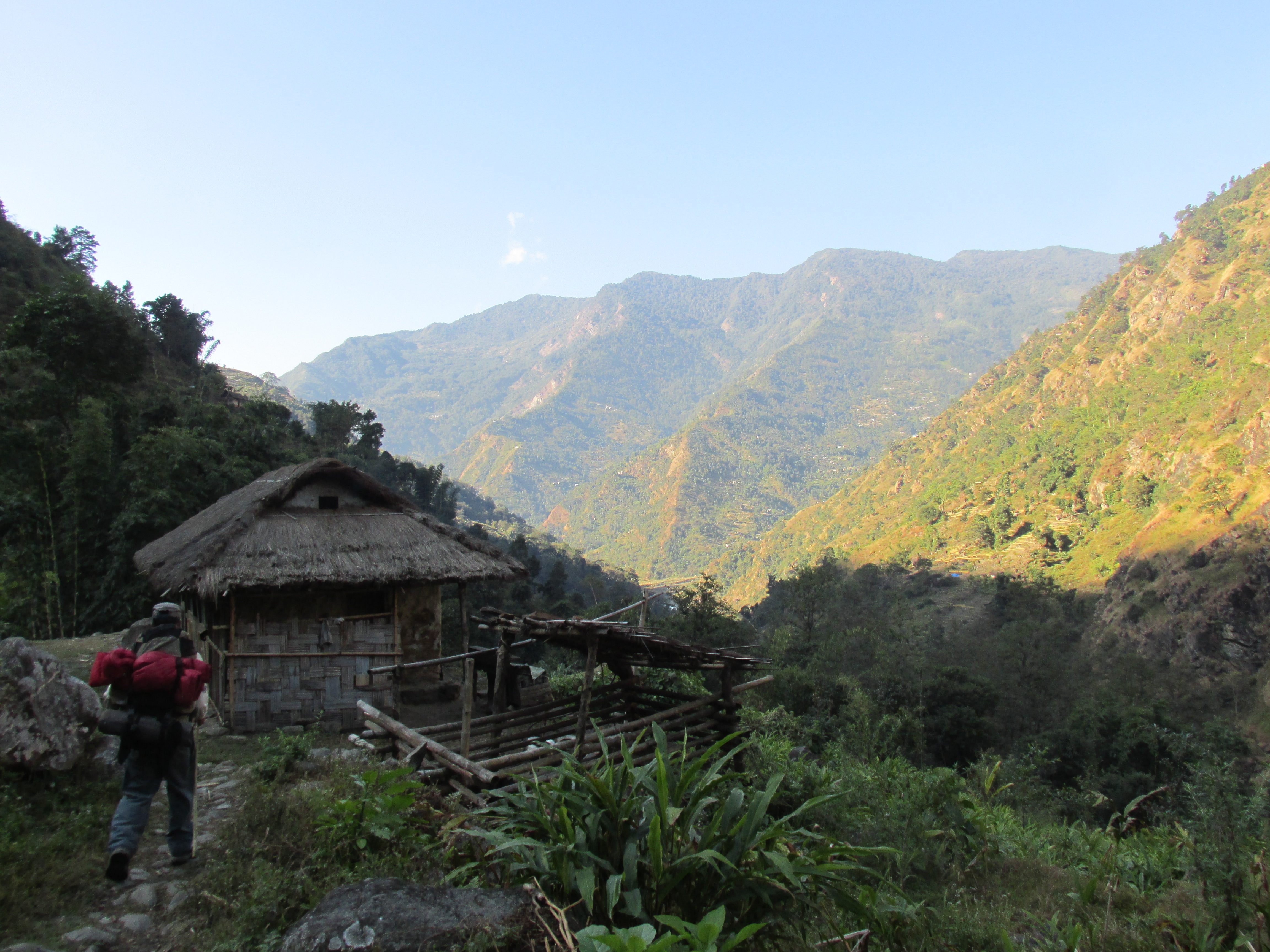
We hiked further down valley and then started our climb towards Taplejung. It was very sunny and I could not help thinking about what it would have been like if I just had gone to the base camp.
I promised myself I would return in spring and take my revenge by hiking back up there and cross the Lumbasamba in the process. My intended trek to Dolpo would be postponed to the summer.
 Last frontiers on foot